
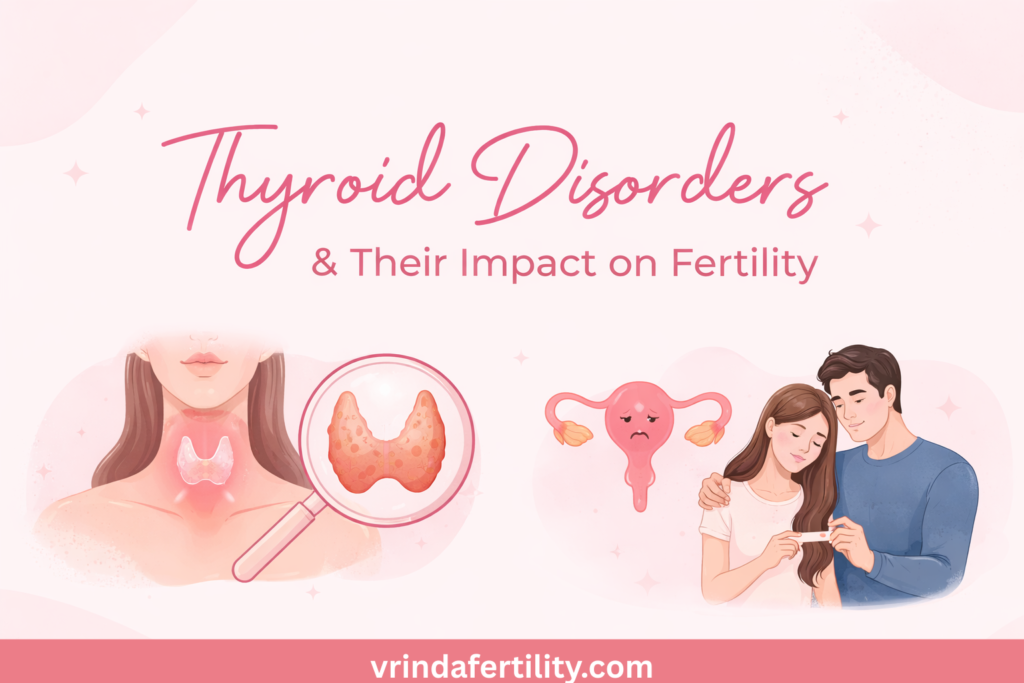
Thyroid Disorders and fertility are closely related because the reproductive system needs a delicate balance of hormones. The thyroid plays a very significant role in ovulation, sperm production, implantation, and pregnancy. Delicate thyroid problems can also cause difficulties in conception. Many couples who are having difficulties conceiving are not aware that the problem could be due to an undiagnosed thyroid problem.
It is very important to understand the role of thyroid hormones in fertility because it is very important for anyone who is trying to conceive naturally or through assisted conception methods such as IUI or IVF. The good news is that most fertility problems caused by thyroid problems can be reversed.
What Is the Thyroid Gland?
The thyroid is a small, butterfly-shaped gland in the neck that produces hormones responsible for:
- Metabolism regulation
- Menstrual cycle balance
- Ovulation control
- Sperm production
- Pregnancy hormone support
Key thyroid hormones include:
- TSH (Thyroid Stimulating Hormone)
- T3 (Triiodothyronine)
- T4 (Thyroxine)
When levels are too high or too low, fertility may be affected.
Types of Thyroid Disorders Affecting Fertility
1. Hypothyroidism (Underactive Thyroid)
This occurs when the thyroid produces insufficient hormones.
Common causes:
- Hashimoto’s thyroiditis (autoimmune disease)
- Iodine deficiency
- Thyroid surgery
- Postpartum thyroid issues
Symptoms:
- Irregular or heavy periods
- Weight gain
- Fatigue
- Depression
- Hair thinning
- Slow ovulation or no ovulation
Fertility impact:
- Anovulation (no egg release)
- Luteal phase defect
- Poor egg quality
- Higher miscarriage risk
- Implantation failure during IVF
2. Hyperthyroidism (Overactive Thyroid)
This condition involves excess thyroid hormone production.
Common causes:
- Graves’ disease
- Thyroid nodules
- Thyroiditis
Symptoms:
- Light or absent periods
- Anxiety
- Weight loss
- Rapid heartbeat
- Heat intolerance
Fertility impact:
- Hormonal imbalance
- Ovulatory dysfunction
- Increased miscarriage risk
- Poor embryo implantation
How Thyroid Disorders Affect Female Fertility
Thyroid hormones interact directly with reproductive hormones like estrogen and progesterone. Disruption may cause:
- Irregular menstrual cycles
- Delayed or absent ovulation
- Poor egg maturation
- Thickened prolactin levels (affects ovulation)
- Increased risk of PCOS overlap
- Endometrial lining problems
Even subclinical hypothyroidism (mild TSH elevation) can reduce IVF success rates and increase pregnancy loss.
Impact on Male Fertility
Thyroid dysfunction does not affect only women. In men, thyroid imbalance may lead to:
- Reduced sperm count
- Poor sperm motility
- Abnormal sperm morphology
- Erectile dysfunction
- Hormonal imbalance (testosterone changes)
Correcting thyroid levels often improves semen parameters significantly.
Thyroid Disorders & Pregnancy Risks
Uncontrolled thyroid Disorders conditions during pregnancy can cause:
- Recurrent miscarriage
- Preterm birth
- Placental problems
- Preeclampsia
- Low birth weight
- Neurodevelopmental issues in the baby
That is why fertility specialists recommend TSH testing before conception.
Ideal Thyroid Levels for Conception
For women trying to conceive:
| Test | Ideal Range for Fertility |
|---|---|
| TSH | 1.0 – 2.5 mIU/L |
| Free T4 | Normal range |
| Thyroid Antibodies | Negative preferred |
Levels considered “normal” for general health may still be too high for fertility.
Diagnosis: Tests Your Fertility Specialist May Recommend
- TSH blood test
- Free T3 & Free T4
- Anti-TPO antibodies
- Anti-thyroglobulin antibodies
- Thyroid ultrasound (if nodules suspected)
Testing is especially important in women with:
- Repeated IVF failure
- Recurrent miscarriages
- PCOS
- Unexplained infertility
Treatment Options for Thyroid-Related Infertility
For Hypothyroidism
- Levothyroxine (thyroid hormone replacement)
- Regular TSH monitoring every 6–8 weeks
- Dose adjustment during pregnancy
For Hyperthyroidism
- Anti-thyroid medications
- Radioiodine therapy (in non-pregnant patients)
- Surgery (rare cases)
Lifestyle Support
- Iodine-adequate diet
- Selenium-rich foods
- Stress reduction
- Proper sleep
When thyroid levels are stabilized, ovulation often resumes naturally.
Thyroid Health & IVF Success
Optimized thyroid levels improve:
- Egg quality
- Embryo implantation
- Endometrial receptivity
- Pregnancy continuation
Many fertility centers ensure TSH is below 2.5 before embryo transfer to improve success rates.
When Should You See a Fertility Specialist?
Seek evaluation if you have:
- Irregular cycles + thyroid symptoms
- Two or more miscarriages
- Failed IVF cycles
- Family history of thyroid disease
- Unexplained infertility
Early management can significantly shorten the time to pregnancy.
FAQs
Q1. Can thyroid disorders cause infertility?
Yes. Both hypothyroidism and hyperthyroidism can disrupt ovulation, menstrual cycles, sperm production, and embryo implantation.
Q2. What TSH level is best for getting pregnant?
A TSH between 1.0 and 2.5 mIU/L is considered optimal for conception.
Q3. Can treating thyroid problems restore fertility?
In many cases, yes. Proper treatment often normalizes ovulation and improves pregnancy success.
Q4. Does thyroid affect IVF success?
Yes. Uncontrolled thyroid levels can reduce implantation rates and increase miscarriage risk.
Q5. Should men get thyroid tests for infertility?
Yes. Thyroid imbalance can affect sperm count, motility, and morphology.
Conclusion
Thyroid Disorders and fertility are closely related since the reproductive system needs a delicate balance of hormones. The thyroid plays a very strong role in ovulation, sperm production, implantation, and pregnancy. Delicate thyroid problems can also cause difficulties in conception. Many couples who are having difficulty conceiving are not aware that their problem could be related to an undiagnosed thyroid problem.
It is very important to understand the role of thyroid hormones in fertility since this information is crucial to anyone who is trying to conceive naturally or through assisted conception methods such as IUI or IVF. The good news is that most fertility problems related to thyroid disorders can be reversed.
When performed at a trusted fertility center, offers a safe, effective, and scientifically proven path toward parenthood.At Vrinda Fertility, we personally guide every couple – bringing medical expertise, latest technology, and emotional support to realize your dream of becoming parents. Get Direction for Best IVF Centre In Delhi and Noida