
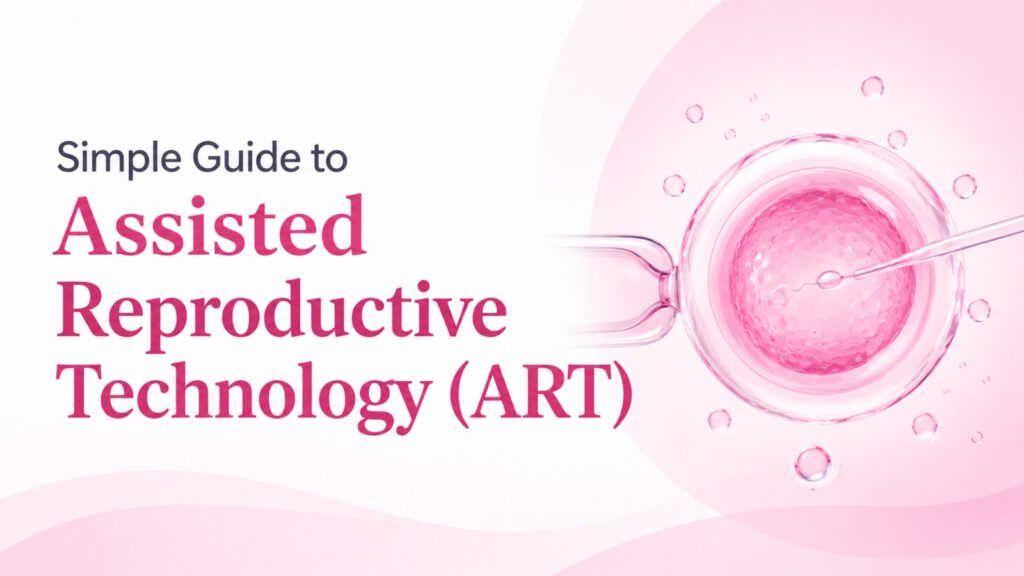
There are many couples that struggle to have children and the advancements in the medical world have given them the ability to achieve that dream with Assisted Reproductive Technology (ART). This guide uses simple descriptions for people who are learning about ART for the first time, as well as explaining different fertility treatment options.
There are many things you will learn about Assisted Reproductive Technology. This includes: the different types of ART procedures, success rates, benefits, costs, and risks of the different procedures, the types of ART available.
Assisted Reproductive Technology (ART) Defined
There are many medical procedures that help couples have the ability to bear children, this is called Assisted Reproductive Technology (ART). Through these procedures, the clinician is able to enhance the likelihood of a client conceiving through the medical manipulation of a clients eggs, sperm, or embryos outside of the clients body.
ART procedures can help many patients with:
– all types of female infertility (including ovulation disorders and even those dealing with endometriosis).
– Male infertility
– Blocked fallopian tubes
– Suffering from unexplained infertility
– Age-related infertility
– certain genetically inherited disorders
The ART process that most people are familiar with is In Vitro Fertilization (IVF). However, there are many different ART options. Each of those will be discussed in detail in the following sections.
The Different Types of Assisted Reproductive Technology
Explaining all the different types of ART will help clients make an informed and proper choice about which fertility treatment is best for them.
1. In Vitro Fertilization (IVF)
IVF is one of today’s most effective treatment options for infertility.
How Does IVF Work?
1. Eggs that are available for donation are stimulated and developed using fertility medications.
2. Eggs are retrieved.
3. Eggs are fertilized through scientific methods.
4. Embryos are nurtured for a period of time to develop.
5. Embryos that are developed adequately are placed into a uterus.
What Are the Indications for IVF?
– Fallopian tubes that are blocked
– Significantly diminished fertility for couples
– Advanced age for women, associated with a loss of fertility
– Same sex couples
– Individuals who require the use of engendered gametes
How Do Success Rates for IVF Work?
Age must be a consideration, along with the other domains of healthy gametes and the health of the reproductive system as a whole. Under the age of 35, women typically have the best success rates.
2. Intrauterine Insemination (IUI)
IUI is a fertility treatment that is more uncomplicated and non-invasive.
How Does IUI Work?
IUI is performed when sperm is inserted into the uterus at the time determined to be ovulation.
What Are the Best Candidate Populations for IUI?
– Male sub-fertility
– Issues associated with the cervical mucous
– Infertility that is unexplained
– Couples who have used sperm from donors
IUI is more affordable than IVF, but often, several attempts must be made.
3. Intracytoplasmic Sperm Injection (ICSI)
ICSI is associated with IVF.
How Does ICSI Work?
Sperm are inserted into an oocyte with through scientific methods to assist with the process of fertilization.
Who Is Included in the ICSI Recipient Population?
– Oligospermia
– Sperm with a poor level of motility
– Failure of the IVF process
ICSI has provided a significant improvement in the treatment of male infertility.
4. Egg Freezing
Egg Freezing enables women to preserve their fertility with the possibility to become pregnant in the future.
Why Do Women Freeze Their Eggs?
– They want to become pregnant in the future
– They have cancer and need to undergo treatment
– They have some medical conditions that may lead to infertility in the future
– They are focused on their careers
Frozen eggs can be used for In Vitro Fertilization (IVF) later on.
5. Embryo Freezing
Embryo freezing preserves fertilized eggs for later use.
Advantages
– Less frequent egg retrievals
– More flexibility in how and when a woman wants to become pregnant
– Additional frozen embryos after undergoing IVF
6. Donor Egg and Donor Sperm Programs
Some couples need to use donor reproductive cells either because of infertility or because of a genetic concern.
Frequent Examples
– Early unsuccessful ovarian functioning
– Genetic disorders
– Parents are in a same sex relationship
– They are a single pushed parent
The donor program is carefully organized to ensure safety and screening for participants.
Who Should Try Assisted Reproductive Technology?
Assisted Reproductive Technology can be an option for people who have:
– Difficulty becoming pregnant after 12 months of trying
– Having multiple pregnancy losses
– Hormonal imbalance disorders
– Difficulties with endometriosis
– PCOS
– Difficulty with infertility in men
– Difficulty in conceiving because of their old age
The best way to assess one’s best option is by scheduling a consultation with a qualified fertility doctor.
Why Use Assisted Reproductive Technology
Assisted Reproducing Technology can provide hope and help to those who are struggling with infertility.
Increase the Chance of Conceiving
Assisted fertility with enhanced treatments can drastically increase the overall success of conception.
Genetic Screening
Assisted Reproductive Technology can provide a screening of genetic conditions as a part of the procedure and before the embryo is transferred.
Family Planning Flexibility
The ability to freeze eggs and embryos allows for women and couples to more effectively plan and place parenthood on the backburner.
Solutions for Various Fertility Problems
Both male and female infertility issues can be addressed when using Assisted Reproductive Technology.
Support for Diverse Families
Single parents and LGBTQ+ couples can build families using ART.
Risks and Side Effects of ART
Like any medical intervention, ART has risks.
Multiple Pregnancies
If several embryos are transplanted, twins or higher order multiples can result.
Ovarian Hyperstimulation Syndrome (OHSS)
Some of the fertility drugs can cause an extreme response to ovarian stimulation.
Emotional Stress
The financial and emotional burden of fertility treatments can be significant.
Procedure-Related Risks
Egg retrieval and other hormone treatments can result in temporary discomfort.
Discussing the risks with a fertility doctor gives patients the information needed to make the best choice.
How Successful Is Assisted Reproductive Technology?
The success of ART varies based on many factors.
Key Factors Affecting Success
– Maternal age
– Embryo quality
– Lifestyle habits
– Infertility factors
– The clinic
Women under the age of 35 often have higher success rates of conceiving with IVF and other fertility treatments.
Preparing for ART Treatment
The success of ART can be increased through proper preparation.
Healthy Lifestyle Tips
– Maintain a healthy weight
– Do not smoke or drink alcohol
– Eat a healthy diet
– Exercise regularly
– Manage stress
Medical Preparation
It may be advisable to have:
– A fertility work-up
– Hormone tests
– Ultrasounds
– A semen analysis
It is important to follow all the medical advice during the process of fertility treatment.
Emotional Impact of Fertility Treatment
Pursuing ART can be taxing to emotional well-being.
Common Emotional Challenges
– Anxiety
– Stress
– Depression
– Strain on relationships
Counselling, support groups, and good communication can be beneficial to couples during the journey to fertility.
Cost of Assisted Reproductive Technology
The cost associated with ART is influenced by the type of treatment, type of fertility drugs, location of the clinic, and whether or not any complementary procedures are needed. Generally, Intrauterine Insemination (IUI) is much less expensive than In Vitro Fertilization (IVF) and can be done in fewer cycles. IVF is typically the more expensive option. There are financing opportunities available at many fertility clinics to make the burden of paying for treatment a little bit easier.
Future of Assisted Reproductive Technology
The field of fertility medicine is growing and changing rapidly.
Future Possibilities
– Artificial Intelligence to help with best embryo selection
– Enhanced Genetic Testing
– More Advanced Cryopreservation
– Tailored Fertility Treatments
All of the above may bring both a reduction in the risks associated with fertility treatment as well as an improvement in the success of achieving and maintaining a pregnancy.
Conclusion
ART has revolutionised the ability for individuals to expand their families and has provided a solution to countless people who wish to realize their dream of becoming a parent. All of the options available in assisted fertility medicine such as IVF and IUI, donor programs, and egg freezing have made each individual’s unique fertility issue manageable.
Art has transformed fertility medicine. Evaluating and understanding the options available including the risks, success rates, and the emotional components can aid individuals in make a knowledgeable decision regarding their reproductive health.
Visiting a specialist is an informative and helpful first step in determining which fertility treatments may best fit the individual.
As technology and science continue to develop modern reproductive medicines, ART will become a more efficient and tailored service to those families in the years to come.
Frequently Asked Questions (FAQ)
The most widespread procedure in the world of assisted reproduction is In Vitro Fertilization (IVF)
Assisted Reproductive Technology (ART) is regarded as safe by obstetricians and gynecologists who specialize in fertility and/or are members of the American Society of Reproductive Medicine (ASRM).
An average of 4 to 6 weeks is the standard timeline for one complete cycle of IVF.
The short answer is no. There is not a fertility assistance procedure that can guarantee the successful achievement of a pregnancy, however, ART increases the probability to a great extent.