
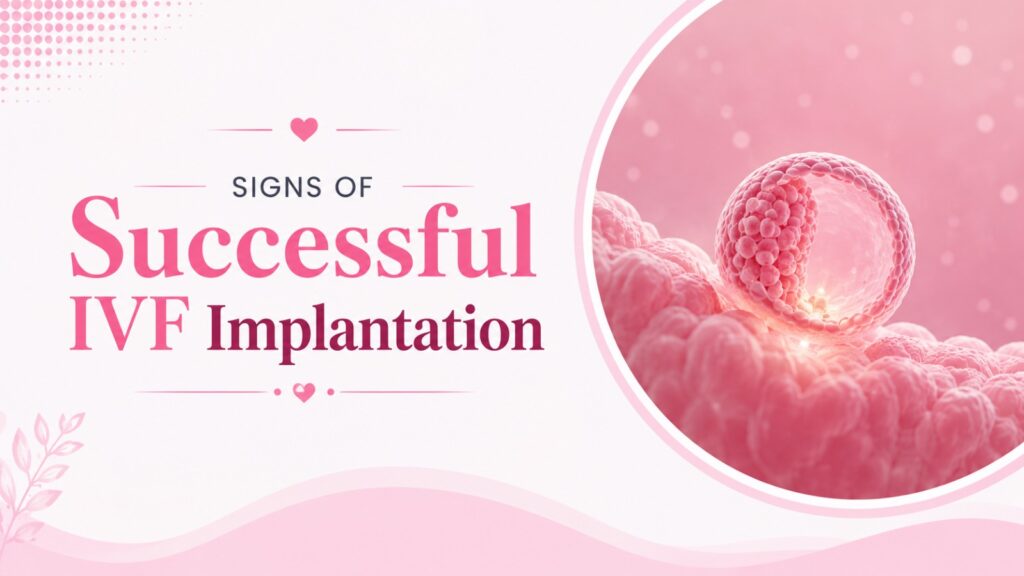
In Vitro Fertilization (IVF) can feel like a waiting game, especially the time in between embryo transfer and the pregnancy test. During this time, people may feel various sensations and symptoms, even changes to their body. They are all observed in anticipation of the good news. One of the most popular questions in this process is: What are the signs of successful IVF implantation?
Successful IVF implantation happens when the embryo that was transferred attaches to the uterine lining and begins its development. While some women report various symptoms of implantation, many report no symptoms at all. Knowing the possible signs allows women to have realistic expectations and helps them understand what their body may or may not be doing.
In this guide, we list various signs of successful IVF implantation, when they may occur, and when it is necessary to contact a fertility specialist.
What is IVF Implantation?
After embryo transfer, IVF implantation is the stage in which the embryo attaches itself to the endometrial lining of the uterus. After IVF implantation is accomplished, the embryo begins to produce the pregnancy hormone, hCG.
IVF implantation occurs in the time frames below depending on the type of embryo transfer that was used.
– 3-5 days after a day-3 embryo transfer
– 1-3 days after a day-5 embryo transfer (blastocyst transfer)
The exact timing can vary slightly based on factors like the quality of the embryo and the receptivity of the uterus.
Common Signs of Successful IVF Implantation
1. Light Implantation Bleeding or Spotting
Mild spotting can be considered one of the earliest signs of implanting successfully.
What It Looks Like:
– Light discharge of pink, brown, or rust colours
– Very small amount of bleeding
– Lasts a few hours to a couple of days
This is due to the embryo embedding itself into the uterine lining and ruptures small blood vessels.
Important Note:
Not all women experience implantation bleeding; not experiencing it does not mean implantation failed.
2. Mild Cramping
Mild abdominal cramping can happen during implantation.
Characteristics:
– Gentle pulling
– Mild cramping like menstruation
– Located in the lower abdomen
These cramps are generally less severe than cramping during a period and resolve fairly quickly.
3. Breast Tenderness and Swelling
Breast soreness can happen after implantation from the changes in hormones.
Symptoms May Include:
– Sore, and/or tender breasts
– Increased sensitivity of nipples
– Breasts feel full and/or heavier
The changes can be caused by an increase in progesterone and hCG.
4. Increased Fatigue
Being unusually tired is a symptom that can happen after the IVF procedure and indicate you are pregnant.
Why It Happens:
After implantation, the levels of progesterone rise and can cause:
– Excessive tiredness
– Low energy
– Increased need for sleep
A lot of women report fatigue as one of the earliest signs that they notice.
5. Frequent Urination
As hCG starts to increase in the body, blood flow to the kidneys also increases.
This can lead to:
– Increased urination
– The need to urinate more often
– Slight changes in how you urinate
While this symptom varies in women and is usually more common during the later stages of pregnancy, most women notice this more often during the initial stages of pregnancy.
6. Nausea and Food Sensitivities
In the first few weeks of pregnancy, some women can experience changes in hormones, and this can cause nausea.
This can lead to any or all of the following food and health changes:
– Morning sickness
– Changing tastes
– Food sensitivities
While this type of nausea is usually common in the later weeks of pregnancy, it can also occur during the early stages of pregnancy.
7. Increased Basal Body Temperature
Some women also, if they are tracking their basal body temperature (BBT), will notice that their temperature is elevated, and this stays elevated following the time of implantation.
Some Possible Observations:
– Elevated temperatures after expected menstruation
– Continuous temperature spikes
BBT does not individually indicate pregnancy.
8. Bloating and Other Digestive Changes
Hormonal changes during pregnancy can lead to changes in digestion, and this can cause:
– Bloating
– Slight Constipation
– Fullness or Pressure in the Abdomen
– Gas
These can all be symptoms that women notice before their menstruation starts, and can be very difficult to distinguish symptoms related to digestion.
9. Changes in Mood
Hormones will change after implantation, and this can lead to changes in your emotional state.
Some women have noticed that they experience any or all of the following:
– Mood Swings
– Increased Sensitivity
– Anxiety
– Happiness or Sadness
Changes in your emotional state can be expected during treatment for infertility, and cannot always be associated with implantation.
10. Increased Vaginal Discharge
Increased production of cervical mucus can be a sign that implantation has occurred.
Some characteristics of this can include:
– White or Creamy Discharge
– No Odour and a Consistent Texture
Signs During Early Pregnancy
Thin or milky appearance
These may be attributed to the hormonal changes and support typically observed during early pregnancy.
Signs That Are Not Reliable Indicators of Implantation
Quite a few patients undergoing an IVF cycle tend to incorrectly interpret certain apparent signs as indicators of a successful pregnancy. This is because the medications used in the IVF cycle will produce symptoms that are similar to those of pregnancy.
These signs include the following:
– Bloating due to progesterone
– Breast tenderness (fertility medications)
– Cramping (minor due to changes in the uterus)
– Fatigue (hormonal supplements)
Due to the IVF medications creating pregnancy-like symptoms, the only real sign of pregnancy is an hCG blood test.
When Do IVF Implantation Symptoms Start?
This varies depending on the type of embryo transfer that is performed.
Day-5 Blastocyst Transfer Timeline
|| Days After Transfer | What May Happen |
|| ——————- | ———————————- |
|| 1–2 Days | The embryo may begin to hatch. |
|| 2–3 Days | Implantation may begin. |
|| 3–5 Days | Implantation may be completed. |
|| 5–7 Days | The embryo may begin to produce hCG. |
|| 9–14 Days | A pregnancy test may produce a positive result. |
Day-3 embryo transfer timeline
Implantation generally occurs a few days later because the embryo is still required to develop further before it is able to attach to the uterine lining.
Can You Have Successful Implantation Without Symptoms?
Yes.
Most women who achieve a normal and healthy pregnancy after IVF, report that they experienced no signs during the implantation stage.
In fact, the following may be indicators of a successful pregnancy:
– No spotting
– No cramping
– No breast tenderness
It is very likely that every pregnancy will be different and the symptoms may also be different.
When Should You Take a Pregnancy Test After IVF?
Most fertility specialists advise:
– Wait about 9 – 14 days after an embryo transfer
– Follow your specific clinic’s instruction
– Avoid early at-home pregnancy tests
Testing early can cause:
– False negatives
– Confusion from the trigger shot
– Stress
The beta hCG test is still the most accurate pregnancy test after IVF.
When to Reach Out to Your Fertility Specialist
You should call a fertility specialist if you have:
– Heavy bleeding
– Extreme abdominal pain
– High fever
– Dizziness or fainting
– High amounts of swelling
These should be addressed by a doctor.
What to do During the IVF 2 Week Wait
Stay Hydrated
Hydration is important for your health.
Follow your Medicines
Continue to take your progesterone and any other medications that have been prescribed.
Avoid Monitoring your Symptoms too Closely
Monitoring your symptoms can further increase your anxiety.
Keep up Gentle Activity
Light daily activity is usually okay but check with your doctor first.
Emotional Care
Meditation, reading, and caring conversations can help you feel better during this waiting period.
Conclusion
It helps to know what the signs and symptoms of successful IVF implantation are to help with the emotional and physical stress during the waiting period post transfer. These signs and symptoms can include light spotting, cramping, fatigue, tenderness of the breasts and bloating and increased vaginal discharge among others. Furthermore, it is important to know that many successful IVF implantations occur with no signs and symptoms at all.
The most accurate and reliable method for confirming implantation and a successful pregnancy remains a beta hCG blood test done by a medical professional. During this waiting time, the best option is to follow your fertility specialist, eat properly, self-care and stress as little as possible.
Every IVF journey is different and the presence or absence of any signs and symptoms does not determine the success or failure of the IVF. The most successful method during this period is to have patience and allow the proper medical care to take place along with a good support system.
Frequently Asked Questions (FAQ)
The most common symptoms are mild cramping and light spotting, but many women experience no symptoms.
Implantation usually 1 – 5 days after embryo transfer, and it depends if a day – 3 embryo or a day – 5 blastocyst was transferred.
Mild cramping is a possibility during IVF implantation, but cramping alone is insufficient to confirm a successful implantation. In fact, the cramping could be a side effect of the IVF medication.
Yes. Many successful IVF implantations happen without any form of spotting or bleeding.