
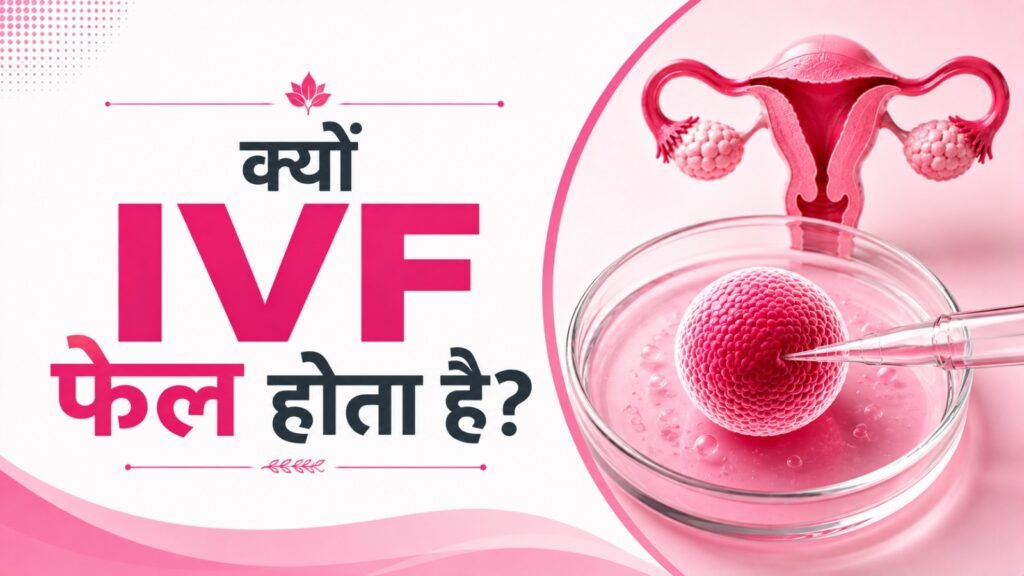
IVF क्यों फेल होता है?
IVF की सफलता कई अलग-अलग biological और medical factors पर निर्भर करती है। Embryo की quality, chromosomes, uterus की स्थिति, endometrial lining, hormones और embryo transfer की प्रक्रिया सभी महत्वपूर्ण भूमिका निभा सकते हैं।
यह भी समझना जरूरी है कि एक बार IVF असफल होने का मतलब यह नहीं है कि भविष्य में IVF सफल नहीं होगा। कई बार किसी एक स्पष्ट कारण की पहचान भी नहीं हो पाती।
इस ब्लॉग में embryo transfer के बाद IVF असफल होने के 7 प्रमुख कारणों को आसान भाषा में समझते हैं।
महत्वपूर्ण: यह जानकारी सामान्य educational purpose के लिए है। आपकी स्थिति के लिए कौन-सी जांच या treatment उचित है, इसका निर्णय fertility specialist ही कर सकते हैं।
IVF क्यों फेल होता है? 7 प्रमुख कारण
1. Embryo में Chromosomal Abnormality
IVF असफल होने का एक महत्वपूर्ण कारण embryo में chromosomal abnormality हो सकता है।
Embryo microscope के नीचे देखने में healthy और अच्छी quality का दिखाई दे सकता है, लेकिन उसके chromosomes सामान्य हों, यह केवल उसकी appearance से निश्चित नहीं किया जा सकता।
उम्र बढ़ने के साथ egg में chromosomal abnormalities की संभावना बढ़ सकती है। इसी वजह से maternal age IVF outcomes को प्रभावित करने वाला महत्वपूर्ण factor है।
यदि embryo में chromosome की संख्या असामान्य है, तो उसके implantation या आगे pregnancy develop करने की क्षमता कम हो सकती है।
क्या PGT-A से IVF failure रोका जा सकता है?
PGT-A यानी Preimplantation Genetic Testing for Aneuploidy embryo के chromosome status के बारे में जानकारी दे सकता है। लेकिन यह IVF pregnancy या live birth की guarantee नहीं है।
ASRM के अनुसार PGT-A को सभी infertility patients में live-birth rate बढ़ाने वाला universal treatment नहीं माना जा सकता। इसका उपयोग व्यक्ति की उम्र, embryo availability और medical history के आधार पर fertility specialist से चर्चा करके किया जाना चाहिए।
2. Embryo Quality या Developmental Potential कम होना
IVF में embryo का बनना ही pregnancy की guarantee नहीं होता।
एक embryo को कई developmental stages से गुजरना पड़ता है:
Egg → Fertilization → Embryo Development → Blastocyst → Implantation → Pregnancy
हर embryo समान क्षमता के साथ develop नहीं करता।
Embryologist embryo की morphology यानी उसकी appearance और development को देखकर उसकी quality का आकलन करते हैं। Blastocyst का expansion, inner cell mass और trophectoderm जैसे factors देखे जा सकते हैं।
लेकिन embryo का बाहर से अच्छा दिखना यह साबित नहीं करता कि वह निश्चित रूप से implant करेगा।
इसीलिए कभी-कभी अच्छी quality का embryo transfer होने के बावजूद IVF सफल नहीं होता।
3. Uterus या Endometrial Lining से जुड़ी समस्या
Embryo को implant होने के लिए uterus का वातावरण उपयुक्त होना जरूरी है।
कुछ uterine या endometrial conditions implantation को प्रभावित कर सकती हैं, जैसे:
- Uterine polyps
- कुछ प्रकार के fibroids
- Uterine adhesions या scar tissue
- Uterine structural abnormalities
- Adenomyosis
- कुछ मामलों में endometriosis से जुड़े factors
हर abnormality pregnancy को प्रभावित करे, यह जरूरी नहीं है। इसलिए केवल किसी scan में abnormal finding मिलने पर उसे IVF failure का निश्चित कारण मानना सही नहीं है।
यदि बार-बार embryo transfer असफल हो रहा है, तो fertility specialist medical history और previous scans के आधार पर यह तय कर सकते हैं कि uterus की आगे जांच आवश्यक है या नहीं।
4. Hormonal Imbalance या Progesterone Timing
Progesterone embryo implantation और pregnancy support में महत्वपूर्ण hormone है।
विशेष रूप से frozen embryo transfer यानी FET cycle में endometrium को embryo transfer के लिए तैयार करने के लिए hormonal preparation महत्वपूर्ण होती है।
Doctor कुछ परिस्थितियों में इन factors की समीक्षा कर सकते हैं:
- Progesterone level
- Estrogen level
- Endometrial thickness
- Progesterone शुरू करने का समय
- Embryo transfer की timing
- Prescribed medicines का सही तरीके से उपयोग
Hormone और embryo के developmental stage के बीच सही synchronization जरूरी है।
हालांकि, हर failed transfer का कारण hormonal problem ही हो, ऐसा नहीं है। इसलिए progesterone या दूसरी hormonal medicines खुद से शुरू या बंद नहीं करनी चाहिए।
5. Embryo Transfer के दौरान Technical Difficulty
Embryo transfer IVF का महत्वपूर्ण चरण है।
आमतौर पर यह एक carefully planned procedure होता है, लेकिन कुछ patients में catheter को uterus तक पहुंचाने में technical difficulty हो सकती है।
इसके संभावित कारणों में शामिल हैं:
- Cervical stenosis
- Cervical anatomy में बदलाव
- Uterus की position
- Previous cervical procedures
- अन्य anatomical factors
ASRM की guidance के अनुसार difficult embryo transfer pregnancy outcomes को प्रभावित कर सकता है।
इसीलिए यदि पिछला transfer technically difficult था, तो doctor future transfer से पहले उस procedure की समीक्षा कर सकते हैं।
लेकिन यह याद रखना महत्वपूर्ण है कि हर failed embryo transfer का मतलब यह नहीं है कि transfer procedure गलत किया गया था।
6. कुछ Medical या Reproductive Conditions
कभी-कभी underlying medical या reproductive conditions IVF outcome को प्रभावित कर सकती हैं।
Patient की history के अनुसार doctor इन factors पर विचार कर सकते हैं:
- Endometriosis
- Adenomyosis
- Uterine abnormalities
- Hormonal disorders
- Previous pelvic surgery
- कुछ metabolic conditions
- Reproductive tract से संबंधित समस्याएं
लेकिन यहां एक महत्वपूर्ण बात समझना जरूरी है—हर patient को बहुत सारे tests कराने की आवश्यकता नहीं होती।
आजकल कई commercial fertility tests और IVF add-ons उपलब्ध हैं, लेकिन हर test या treatment के लिए मजबूत scientific evidence उपलब्ध नहीं है।
इसलिए किसी भी additional test से पहले यह पूछना उचित है:
“यदि यह test abnormal आया, तो treatment plan में क्या बदलाव किया जाएगा?”
7. कभी-कभी कोई स्पष्ट कारण नहीं मिलता
यह IVF failure का सबसे मुश्किल पहलू हो सकता है।
कई बार doctor embryo, uterus, hormones और transfer procedure की समीक्षा करने के बाद भी कोई निश्चित कारण नहीं खोज पाते।
इसका मतलब यह नहीं है कि IVF treatment गलत था या patient ने कुछ गलत किया।
Human reproduction अपने आप में complex है। हर embryo implant नहीं करता और हर implantation pregnancy में convert नहीं होती।
ASRM और ESHRE दोनों की guidance यह बताती है कि recurrent implantation failure के मामले में भी हर patient के लिए एक ही कारण या एक ही treatment लागू नहीं किया जा सकता।
इसलिए बिना स्पष्ट medical indication के बहुत सारे tests या unproven treatments करवाना हमेशा बेहतर विकल्प नहीं होता।
एक बार IVF फेल होने के बाद क्या करें?
Embryo transfer असफल होने के बाद सबसे पहले fertility specialist के साथ पिछले cycle की detailed review करना उपयोगी हो सकता है।
Embryo से जुड़े सवाल
- Embryo किस stage पर transfer किया गया था?
- Embryo की morphology कैसी थी?
- क्या PGT-A किया गया था?
- Embryo का development कैसा रहा?
- क्या अन्य embryos available हैं?
Uterus से जुड़े सवाल
- क्या uterine cavity की हाल में जांच हुई है?
- Endometrial lining कैसी थी?
- क्या polyp या fibroid मौजूद था?
- क्या transfer technically difficult था?
Hormones से जुड़े सवाल
- Progesterone support उचित था?
- Hormone levels की जांच की गई थी?
- Progesterone सही समय पर शुरू किया गया था?
- Medicines सही तरीके से ली गई थीं?
इन सवालों के जवाब future treatment plan बनाने में मदद कर सकते हैं।
क्या एक बार IVF फेल होने के बाद दोबारा IVF करना चाहिए?
एक failed embryo transfer का अर्थ यह नहीं है कि आपको recurrent implantation failure है।
IVF की सफलता कई factors पर निर्भर करती है और एक unsuccessful cycle भविष्य की सफलता की निश्चित भविष्यवाणी नहीं करता।
Doctor आपकी:
- उम्र
- embryo quality
- embryo की genetic information, यदि उपलब्ध हो
- uterine condition
- previous IVF history
- hormonal preparation
- overall fertility history
को देखकर अगला कदम तय कर सकते हैं।
यदि कोई स्पष्ट समस्या नहीं मिलती, तो कई मामलों में अतिरिक्त और unproven treatments जोड़ने के बजाय उपलब्ध embryos के साथ आगे बढ़ना उचित हो सकता है।
IVF के बाद कौन-से “Add-ons” जरूरी हैं?
Failed IVF के बाद मरीज अक्सर implantation बढ़ाने वाले अलग-अलग treatments के बारे में सुनते हैं।
इनमें कुछ immune therapies, assisted hatching और specialized tests आदि शामिल हो सकते हैं।
लेकिन हर IVF add-on scientifically proven नहीं है।
किसी भी अतिरिक्त treatment से पहले doctor से पूछें:
- क्या इसका clinical evidence मजबूत है?
- क्या इससे live birth की संभावना बढ़ती है?
- इसके side effects क्या हैं?
- इसकी cost कितनी है?
- क्या मेरी specific situation में इसकी आवश्यकता है?
ASRM की guidance के अनुसार कई commonly promoted IVF add-ons के लिए evidence सीमित या inconsistent हो सकता है।
इसलिए केवल इसलिए कोई treatment न लें क्योंकि वह “implantation बढ़ाने” के नाम से marketed है।
क्या Lifestyle IVF Failure का कारण हो सकता है?
Healthy lifestyle overall reproductive health के लिए महत्वपूर्ण है।
Balanced diet, regular physical activity, healthy weight, smoking से बचना और alcohol तथा recreational drugs से दूरी pregnancy planning के दौरान महत्वपूर्ण हो सकती है।
लेकिन failed embryo transfer के लिए खुद को दोष देना उचित नहीं है।
एक unsuccessful IVF cycle का मतलब यह नहीं है कि आपने गलत खाना खाया, थोड़ा ज्यादा काम किया, यात्रा की या पर्याप्त positive नहीं सोचा।
IVF outcome कई biological factors से प्रभावित होता है जिन्हें patient अपने control में नहीं रख सकता।
Failed Embryo Transfer के बाद Doctor से क्या पूछें?
अपने fertility specialist से निम्न सवाल पूछना उपयोगी हो सकता है:
- मेरे embryo की quality कैसी थी?
- क्या embryo के chromosomal status के बारे में कोई जानकारी है?
- मेरा endometrial lining development कैसा था?
- क्या hormone levels और progesterone timing उचित थी?
- क्या embryo transfer आसान था या technically difficult?
- क्या uterus की दोबारा जांच की जरूरत है?
- क्या कोई specific problem मिली जिसे अगले cycle से पहले ठीक किया जा सकता है?
- क्या किसी additional test का परिणाम treatment plan बदलेगा?
- क्या मेरे लिए PGT-A या कोई अन्य treatment उचित है?
- अगली transfer में क्या बदला जाएगा और क्यों?
यह discussion आपको unnecessary tests और treatments से बचने में भी मदद कर सकती है।
निष्कर्ष
IVF क्यों फेल होता है इसका कोई एक universal answer नहीं है। Embryo की chromosomal health, embryo quality, uterus की स्थिति, endometrial receptivity, hormonal preparation और transfer technique जैसे कई factors pregnancy outcome को प्रभावित कर सकते हैं।
IVF failure के 7 प्रमुख कारणों को संक्षेप में देखें तो वे हैं:
- Embryo में chromosomal abnormalities
- Embryo quality या developmental potential
- Uterus या endometrial lining से जुड़ी समस्याएं
- Hormonal timing और progesterone-related factors
- Difficult embryo transfer
- Underlying medical या reproductive conditions
- ऐसा कारण जिसका पता नहीं चल पाता
सबसे महत्वपूर्ण बात यह है कि एक असफल embryo transfer को अपनी गलती न मानें। IVF एक complex biological process है और हर transfer का परिणाम निश्चित नहीं होता।
यदि IVF असफल हुआ है, तो अगला कदम घबराकर हर उपलब्ध test या treatment करवाना नहीं, बल्कि fertility specialist के साथ पिछले cycle की evidence-based समीक्षा करना है। जहां कोई स्पष्ट और treatable समस्या मिले, उसे address किया जा सकता है; और जहां कोई कारण न मिले, वहां unnecessary interventions से बचना भी medical care का महत्वपूर्ण हिस्सा है।
स्रोत: American Society for Reproductive Medicine (ASRM) और European Society of Human Reproduction and Embryology (ESHRE) की उपलब्ध clinical guidance और recommendation.
For a successful IVF journey, visit Vrinda Fertility. Delhi/Noida