
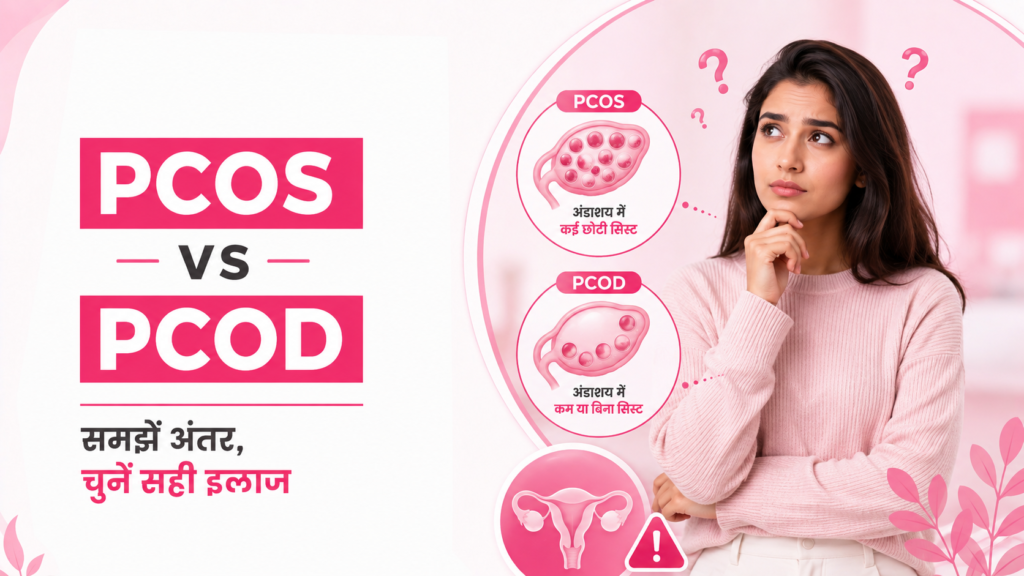
PCOS vs PCOD:
Polycystic ovary syndrome and polycystic ovary disease are terms that are often used interchangeably, but they do not mean exactly the same thing. Understanding the distinction can help women recognize symptoms, seek appropriate medical care, and make informed decisions about their reproductive and overall health.
A key point is that PCOS is a recognized medical syndrome, while PCOD is a less standardized term that is commonly used to describe a condition involving ovarian hormonal or ovulatory disturbances. The terminology can vary between countries, healthcare providers, and patients.
Both conditions may be associated with irregular menstrual cycles, hormonal changes, acne, weight changes, and difficulties with ovulation. However, their underlying patterns, potential long-term health implications, and management can differ.
What Is PCOS?
PCOS, or polycystic ovary syndrome, is a complex hormonal and metabolic disorder affecting people with ovaries, particularly during the reproductive years.
Despite its name, having ovarian cysts is not required for a PCOS diagnosis. The condition can involve irregular ovulation, increased androgen activity, and metabolic changes such as insulin resistance.
Common features may include:
- Irregular or infrequent periods
- Excess facial or body hair
- Acne or oily skin
- Hair thinning or male-pattern hair growth
- Difficulty with ovulation
- Weight gain or difficulty losing weight
- Insulin resistance
- Fertility difficulties
PCOS can also increase the risk of certain longer-term health problems, including type 2 diabetes and abnormalities of the uterine lining when menstrual cycles are very infrequent.
What Is PCOD?
PCOD is commonly expanded as polycystic ovarian disease. The term is frequently used in South Asian healthcare settings and everyday conversations.
PCOD is generally used to describe ovaries that may produce multiple immature follicles along with hormonal or ovulatory disturbances. However, unlike PCOS, PCOD does not have one universally accepted diagnostic definition.
Some women with what is described as PCOD may experience:
- Irregular periods
- Delayed ovulation
- Acne
- Weight changes
- Increased hair growth
- Difficulty conceiving
The symptoms can overlap substantially with PCOS, which is one reason the two terms are frequently confused.
PCOS vs PCOD: What Is the Difference?
The simplest way to understand PCOS vs PCOD is to recognize that PCOS is a defined endocrine and reproductive syndrome, whereas PCOD is a broader and less standardized term.
| Feature | PCOS | PCOD |
|---|---|---|
| Full form | Polycystic ovary syndrome | Polycystic ovarian disease |
| Medical terminology | Well-established clinical syndrome | Less standardized term |
| Main features | Ovulatory dysfunction, androgen excess and/or polycystic ovarian morphology | Often describes irregular ovulation and multiple immature follicles |
| Hormonal involvement | Common and clinically important | May occur |
| Insulin resistance | Common in many patients | May occur, depending on the individual |
| Periods | Frequently irregular | May be irregular |
| Fertility | Ovulation problems can affect fertility | Ovulation problems may affect fertility |
| Long-term metabolic concerns | Important consideration | Depend on the underlying condition and individual risk factors |
| Diagnosis | Based on established clinical criteria | Terminology and criteria can vary |
| Management | Lifestyle measures and medical treatment when indicated | Depends on symptoms and the actual underlying diagnosis |
The important takeaway
The terms should not be treated as two universally defined diseases that are simply different versions of the same condition. If someone has been told they have “PCOD,” it may be useful to ask their healthcare professional what specific diagnosis or hormonal problem they mean by that term.
Symptoms of PCOS and PCOD
Because the terminology overlaps, symptoms alone cannot reliably distinguish between the two.
Menstrual changes
Irregular periods are among the most common warning signs. Some women may have long gaps between periods, while others may have unpredictable bleeding.
Changes in menstruation can occur for many reasons, including pregnancy, thyroid disorders, elevated prolactin, significant weight changes, excessive exercise, stress, and other reproductive conditions.
Acne
Androgen-related hormonal changes can stimulate oil production and contribute to persistent acne, particularly around the jawline, chin, and lower face.
Excess hair growth
Increased androgen activity may cause unwanted coarse hair growth on areas such as the face, chest, abdomen, or back.
Hair thinning
Some women experience thinning of scalp hair, particularly around the crown or parting line.
Weight changes
Weight gain can occur in PCOS, although not every woman with PCOS is overweight. Similarly, body weight alone cannot establish whether someone has PCOS or PCOD.
Fertility challenges
Irregular ovulation can make conception more difficult. However, an irregular cycle does not mean that pregnancy is impossible.
PCOS vs PCOD: Causes and Risk Factors
There is no single cause of PCOS. Researchers believe it results from a combination of genetic, hormonal, metabolic, and environmental factors.
Potential contributors include:
- Family history
- Increased androgen activity
- Insulin resistance
- Abnormal ovarian function
- Metabolic factors
- Genetic susceptibility
PCOD is used less consistently, so its causes depend on what condition the healthcare professional is actually describing.
This is why getting a precise diagnosis matters more than focusing solely on the label.
Is PCOS More Serious Than PCOD?
It is not accurate to say that one is automatically “more serious” for every woman.
The clinical significance depends on the individual’s symptoms, reproductive goals, metabolic health, menstrual pattern, and other risk factors.
PCOS deserves particular attention because it can involve both reproductive and metabolic health. Women with PCOS may have a higher risk of insulin resistance, impaired glucose regulation, type 2 diabetes, high cholesterol, high blood pressure, and other cardiometabolic problems.
That does not mean every woman with PCOS will develop these complications.
Similarly, someone told they have PCOD should not assume that the condition is harmless simply because the name sounds less serious. The underlying reason for irregular cycles or hormonal symptoms should be evaluated.
How Are PCOS and PCOD Diagnosed?
There is no single blood test that can diagnose PCOS in every patient.
Healthcare professionals typically consider:
- Medical and menstrual history
- Physical examination
- Hormonal and metabolic blood tests when appropriate
- Pregnancy testing when relevant
- Pelvic ultrasound when clinically indicated
- Other possible causes of symptoms
For adults, one widely used approach to diagnosing PCOS considers combinations of:
- Ovulatory dysfunction
- Clinical or biochemical evidence of androgen excess
- Polycystic ovarian morphology on ultrasound or, in some circumstances, other accepted markers
Other causes of similar symptoms need to be excluded.
Does an ultrasound confirm PCOS?
No.
The presence of multiple follicles on an ultrasound does not automatically mean someone has PCOS. In fact, ovarian appearance can vary with age, reproductive stage, and ultrasound technology.
Likewise, having “cysts” on the ovaries does not necessarily mean a woman has PCOS.
PCOS vs PCOD and Fertility
One of the most common concerns women have is whether these conditions affect their ability to become pregnant.
The answer is: they can affect fertility, but neither diagnosis automatically means infertility.
When ovulation occurs irregularly, it can be harder to predict the fertile window and achieve pregnancy.
Treatment depends on the individual’s circumstances.
For someone trying to conceive, a doctor may consider:
- Ovulation assessment
- Weight and metabolic health
- Management of underlying conditions
- Ovulation-induction medication when appropriate
- Other fertility treatments if needed
Many women with PCOS-related ovulatory dysfunction are able to conceive with appropriate management.
PCOS vs PCOD Treatment
There is no single treatment plan that works for every woman. Treatment should address the individual’s symptoms and goals.
1. Lifestyle changes
A balanced lifestyle can be an important part of managing hormonal and metabolic health.
Helpful habits may include:
- Regular physical activity
- A nutrient-dense diet
- Adequate protein and fiber
- Consistent sleep
- Stress-management strategies
- Avoiding smoking
- Maintaining a healthy weight when appropriate
Even when weight loss is not necessary, regular exercise and healthy eating can benefit metabolic health.
2. Menstrual-cycle management
For women who do not want to become pregnant, healthcare professionals may recommend hormonal contraception or other treatments to regulate bleeding and protect the uterine lining.
The appropriate option depends on medical history and individual needs.
3. Managing androgen-related symptoms
Treatments may be considered for acne, unwanted hair growth, or scalp hair thinning.
These can include dermatological treatments, hormonal therapies, or other medications depending on the symptom and the patient’s circumstances.
4. Fertility treatment
Women trying to conceive may need treatment aimed at restoring or inducing ovulation.
The choice of medication depends on the diagnosis, fertility evaluation, medical history, and other factors.
Can PCOS or PCOD Be Cured?
PCOS is generally considered a long-term condition that can be effectively managed, rather than something that has a simple permanent cure.
Symptoms can improve substantially with appropriate treatment and lifestyle changes.
The same caution applies to the term PCOD: because it is used inconsistently, whether it can “go away” depends on the underlying issue being described.
Be cautious of products or programs promising to permanently “cure PCOS in 7 days” or reverse hormonal problems through a single food, supplement, or detox.
Diet and Lifestyle Tips for Hormonal Health
There is no universally prescribed “PCOS diet.”
Instead, a sustainable eating pattern that supports metabolic health is generally more useful than extreme restriction.
Consider emphasizing:
- Vegetables and fruits
- Whole grains and high-fiber carbohydrates
- Beans and legumes
- Nuts and seeds
- Lean protein sources
- Fish and other nutrient-rich foods
- Healthy unsaturated fats
- Adequate hydration
Limiting excessive intake of highly processed foods and added sugars may also be beneficial, particularly for people with insulin resistance or other metabolic concerns.
The goal should be consistency rather than perfection.
When Should You See a Doctor?
Consider speaking with a gynecologist or healthcare professional if you experience:
- Very irregular or absent periods
- Persistent acne with other hormonal symptoms
- New or excessive facial/body hair
- Unexplained scalp hair thinning
- Difficulty becoming pregnant
- Significant unexplained weight changes
- Symptoms suggestive of high blood sugar or metabolic problems
Very heavy bleeding, severe pelvic pain, fainting, or other sudden or severe symptoms warrant prompt medical attention.
Final Thoughts
Understanding PCOS vs PCOD starts with recognizing that the two labels are not equally standardized medical diagnoses. PCOS is a defined hormonal and metabolic syndrome, while PCOD is a term whose meaning can vary depending on the healthcare setting.
The symptoms can overlap considerably—from irregular periods and acne to unwanted hair growth and fertility challenges. Rather than relying on an ultrasound, online symptom checklist, or the name of a condition alone, women should seek an individualized medical assessment.
With the right diagnosis, monitoring, lifestyle measures, and treatment when necessary, many women can effectively manage hormonal symptoms, protect their long-term health, and achieve their reproductive goals.
This article is for educational purposes and should not replace personalized medical advice from a qualified healthcare professional.