
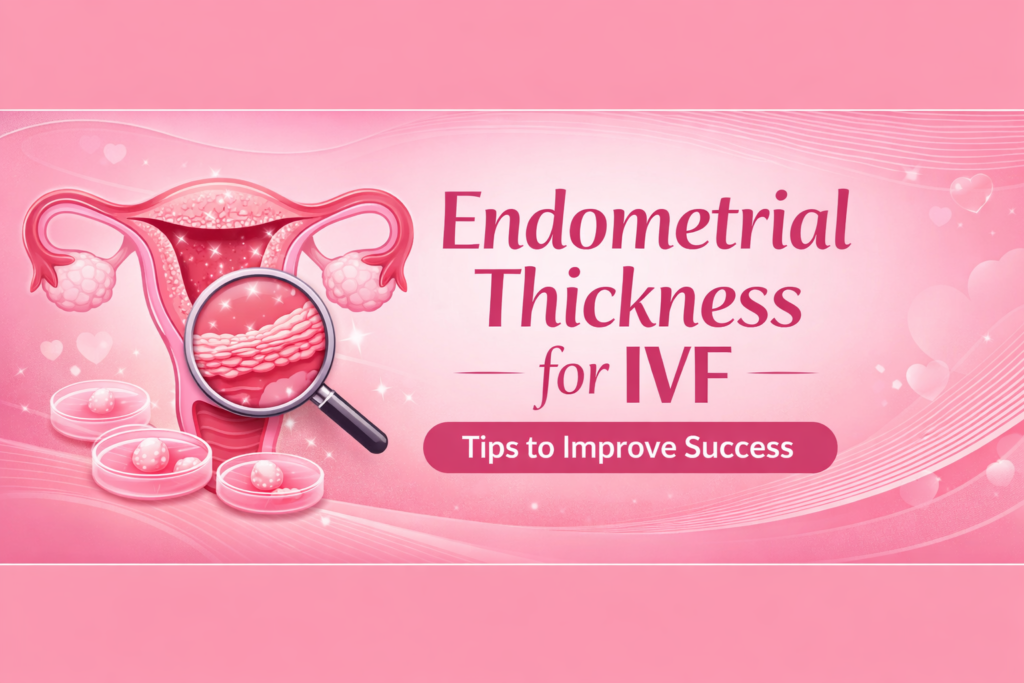
The endometrial thickness for ivf measured in an IVF procedure pertains to the thickness of the endometrial layer that takes an implantation process to facilitate embryo implantation in an IVF cycle. The endometrial thickness measured with the use of transvaginal ultrasound has come to be identified as an important parameter that decides the success potential of an IVF procedure.
In majority cases of IVF, the thickness of the endometrium ranging between 8-12 mm and having a trilaminar appearance is adequate. A suboptimal endometrial thickness can make implantation rather difficult; hence, reproductive specialists regularly monitor the thickness of the endometrium during IVF and accordingly take necessary measures to enhance its receptability before embryo transfer.
Understanding thin Endometrial lining in IVF
Endometrial thickness refers to the measurement of the uterine lining, assessed via transvaginal ultrasound. During IVF treatment, the endometrium should ideally be well-developed to allow successful embryo attachment.
Ideal Endometrial Thickness for IVF Success
- Optimal thickness: 8–12 mm
- Minimum acceptable thickness: ≥7 mm
- Trilaminar (three-line) pattern is considered most receptive
A thin endometrium may affect IVF pregnancy rates, making it important to address early in the treatment cycle.
Common Causes of Thin Endometrial Lining
Understanding the root cause is the first step in learning how to increase endometrial thickness of IVF effectively.
Key Causes Include:
- Hormonal imbalance
- Poor uterine blood flow
- Previous uterine surgeries or infections
- Repeated D&C procedures
- Asherman’s syndrome
- Advanced maternal age
An experienced fertility specialist will evaluate these factors before recommending treatment.
How to Increase Endometrial Thickness for IVF Naturally
While medical intervention is often required, certain lifestyle and nutritional changes can support uterine lining growth.
1. Nutrition That Supports Endometrial Growth
A fertility-friendly diet helps improve blood flow and hormone balance.
Recommended foods:
- Beetroot and pomegranate
- Leafy green vegetables
- Nuts and seeds
- Omega-3 rich foods (flaxseeds, walnuts)
- Protein-rich foods (eggs, legumes)
These foods are commonly advised by fertility experts to support IVF preparation.
2. Improve Uterine Blood Flow
Good circulation helps deliver estrogen and nutrients to the uterus.
Helpful practices include:
- Light walking or yoga
- Avoiding smoking and alcohol
- Managing stress levels
Improved blood flow plays a key role in how to increase endometrial thickness of IVF cycles naturally.
Medical Treatments to Increase Endometrial Thickness for IVF
When natural methods are insufficient, fertility centers offer advanced medical solutions.
1. Estrogen Therapy
Estrogen is essential for endometrial growth and may be given as:
- Oral tablets
- Transdermal patches
- Vaginal estrogen
Dosage is customized based on individual response.
2. Vaginal Sildenafil
Used to enhance uterine blood flow, this therapy may help improve lining thickness in resistant cases.
3. PRP (Platelet-Rich Plasma) Therapy
PRP is an advanced technique where growth-factor-rich plasma is infused into the uterus to stimulate lining regeneration.
This method is gaining popularity in repeated IVF failure cases.
4. G-CSF and Other Advanced Therapies
Granulocyte Colony-Stimulating Factor (G-CSF) may be used in selected patients to improve endometrial receptivity.Such treatments are offered only at specialized fertility centers with advanced expertise.
Role of Fertility Center Expertise in Endometrial Improvement
Choosing the right fertility center is critical when addressing thin endometrium in IVF.
What Expert IVF Centers Offer:
- Personalized stimulation protocols
- Advanced ultrasound monitoring
- Evidence-based treatment plans
- Multidisciplinary fertility care
A well-equipped IVF center significantly improves outcomes when managing complex endometrial issues.
IVF Success Rates and Endometrial Thickness
Clinical evidence shows that women with optimal endometrial thickness have:
- Higher implantation rates
- Better IVF pregnancy outcomes
- Lower cycle cancellation rates
This highlights why understanding endometrial thickness of IVF is vital for both doctors and patients.
When to Delay Embryo Transfer
In some cases, fertility specialists may recommend freezing embryos and transferring them in a later cycle once the endometrium improves.
This strategy often results in better success rates and healthier pregnancies.
Conclusion
Learning endometrial thickness of IVF is a crucial step in achieving a successful pregnancy. With the right combination of lifestyle changes, medical treatment, and expert fertility care, many women overcome this challenge.
When performed at a trusted fertility center, TESE Sperm Retrieval offers a safe, effective, and scientifically proven path toward parenthood.At Vrinda Fertility, we personally guide every couple – bringing medical expertise, latest technology, and emotional support to realize your dream of becoming parents. Get Direction for Best IVF Centre In Delhi and Noida
Frequently Asked Questions
The ideal endometrial thickness for IVF is 7–14 mm for optimal embryo implantation
Yes, IVF can succeed with thin endometrium with proper medical treatment.
It is measured using transvaginal ultrasound to assess uterine lining and readiness for embryo transfer.
Healthy diet, hydration, exercise, stress management, and avoiding smoking can support endometrial growth.