
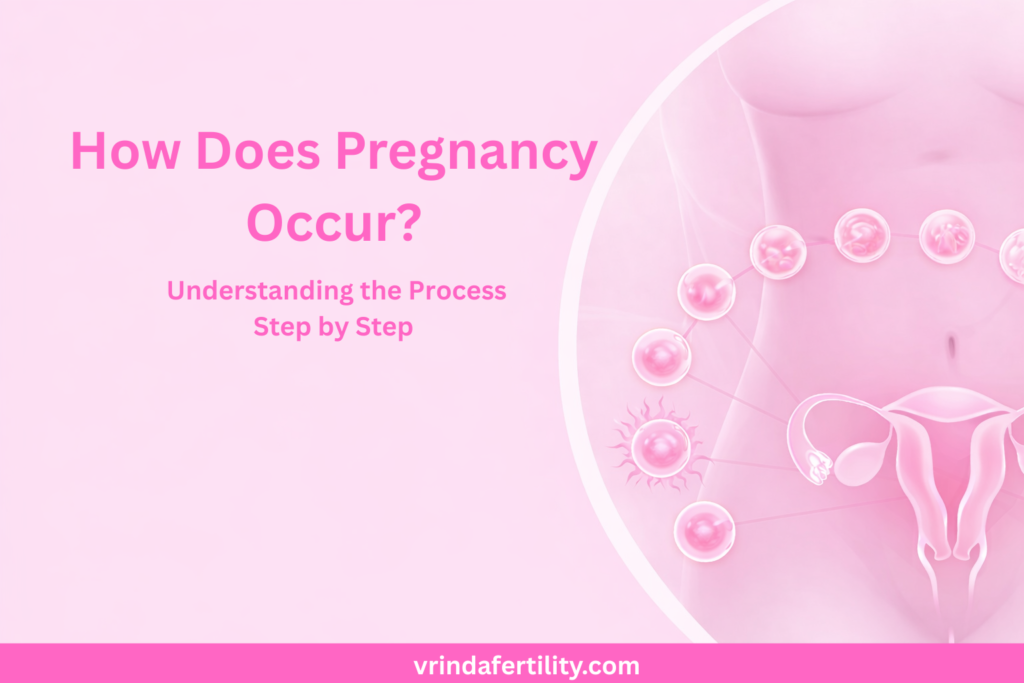
Pregnancy is probably one of the most incredible biological processes in the human body. Even though everyone knows how does pregnancy occurs when a sperm and egg meet, the process of conception is much more complex and interesting. Learning about conception can facilitate couples wishing to bear a child, people with conception problems, and people generally interested in conception and human reproduction.
In this comprehensive guide, we will walk you through the process of pregnancy from ovulation to implantation in a way that’s easy to understand. This article is based on worldwide medical standards and is of particular significance to India, where awareness of reproductive health and fertility planning is rapidly increasing.
What Is Pregnancy?
Pregnancy is the condition in which a fertilized egg (embryo) implants in the uterus and begins to develop into a fetus. A full-term pregnancy typically lasts about 40 weeks, calculated from the first day of the last menstrual period (LMP).
For pregnancy to occur naturally, several steps must happen in the correct sequence—and at the right time.
Step-by-Step Process: How Does Pregnancy Occur?
1. Ovulation: Release of the Egg
The first and the most important process in conception and pregnancy development is ovulation.
- It usually happens at about day 14 of a 28-day menstrual cycle
- One mature egg is released from the ovary
- The egg travels into the fallopian tube
- The egg survives for 12–24 hours
This period is termed the fertile window. Pregnancy can occur during this period only.
2. Sexual Intercourse and Sperm Journey
During unprotected sexual intercourse:
- Millions of sperm are released into the vagina
- Sperm travel through the cervix and uterus
- They reach the fallopian tube within minutes to hours
- Sperm can survive up to 5 days inside the female reproductive tract
This survival ability allows pregnancy even if intercourse occurs a few days before ovulation.
3. Fertilization: When Sperm Meets Egg
Fertilization occurs when:
- A healthy sperm penetrates the egg
- This usually happens in the fallopian tube
- The egg and sperm combine genetic material
- A single-cell structure called a zygote is formed
Only one sperm fertilizes the egg; the egg then blocks others from entering.
4. Cell Division and Embryo Formation
After fertilization:
- The zygote starts dividing rapidly
- It becomes a blastocyst within 4–5 days
- The blastocyst continues traveling toward the uterus
At this stage, the future baby’s genetic sex is already determined.
5. Implantation in the Uterus
Implantation is the final and most critical step for pregnancy to continue.
- Occurs 6–10 days after fertilization
- The blastocyst attaches to the uterine lining (endometrium)
- The uterus supplies nutrients and oxygen
- Pregnancy hormones (hCG) begin to rise
If implantation does not occur, pregnancy cannot continue.
What Happens After Implantation?
Once implantation is successful:
- The placenta starts forming
- Hormones support pregnancy
- Menstrual periods stop
- Early pregnancy symptoms may appear
This marks the official beginning of pregnancy.
Early Signs That Pregnancy Has Occurred
Common early pregnancy symptoms include:
- Missed period
- Breast tenderness
- Mild cramping or spotting (implantation bleeding)
- Nausea or vomiting
- Fatigue
- Frequent urination
However, symptoms vary from woman to woman.
Factors That Affect How Easily Pregnancy Occurs
Several biological and lifestyle factors influence conception:
Female Factors
- Age (fertility declines after 35)
- Regular ovulation
- Hormonal balance
- Healthy uterus and fallopian tubes
Male Factors
- Sperm count and motility
- Sperm morphology
- Lifestyle habits
Lifestyle & Health Factors
- Stress
- Smoking or alcohol
- Poor nutrition
- Obesity or being underweight
Can Pregnancy Occur Without Intercourse?
Yes, in rare or assisted cases:
- IVF (In Vitro Fertilization)
- IUI (Intrauterine Insemination)
These fertility treatments are commonly offered at specialized fertility centers in India for couples struggling with infertility.
How Long Does It Take to Get Pregnant?
- Healthy couples: within 6–12 months
- About 80% conceive within one year
- If not pregnant after 12 months (or 6 months if over 35), medical evaluation is advised
When Should You Consult a Fertility Specialist?
You should seek medical advice if:
- Trying for over a year without success
- Irregular or absent periods
- History of miscarriage
- Known reproductive conditions
- Male fertility concerns
Early guidance from a qualified fertility specialist improves outcomes.
FAQs: How Does Pregnancy Occur?
Q1. How does pregnancy occur naturally?
Pregnancy occurs naturally when a sperm fertilizes an egg during ovulation, followed by implantation of the embryo in the uterus.
Q2. Can pregnancy happen without ovulation?
No, natural pregnancy cannot occur without ovulation because no egg is available for fertilization.
Q3. How soon after ovulation does pregnancy occur?
Fertilization occurs within 24 hours of ovulation, and implantation happens 6–10 days later.
Q4. Can pregnancy happen on the first attempt?
Yes, if intercourse happens during the fertile window, pregnancy can occur on the first attempt.
Q5. Is implantation bleeding a sign of pregnancy?
Yes, light spotting during implantation can be an early sign of pregnancy, but not all women experience it.
How Understanding Pregnancy Helps in Fertility Planning
Knowing how pregnancy occurs step by step empowers couples to:
- Time intercourse correctly
- Identify fertility issues early
- Make informed lifestyle changes
- Seek treatment when needed
Education is the first step toward a healthy pregnancy.
Conclusion: Understanding the Miracle of Pregnancy
The biological and complex process of pregnancy involves ovulation, fertilization, embryonic development, and implantation. All these processes must be perfectly synchronized for conception to be successful. In order to understand how pregnancy happens, individuals can make well-informed decisions regarding their reproductive health and various treatment intervention.
It is clear that, if a pregnancy does not occur spontaneously, there are now safe and effective remedies. Early awareness, medical advice, and supportive care can make all the difference in the world.
When performed at a trusted fertility center, offers a safe, effective, and scientifically proven path toward parenthood.At Vrinda Fertility, we personally guide every couple – bringing medical expertise, latest technology, and emotional support to realize your dream of becoming parents. Get Direction for Best IVF Centre In Delhi and Noida