
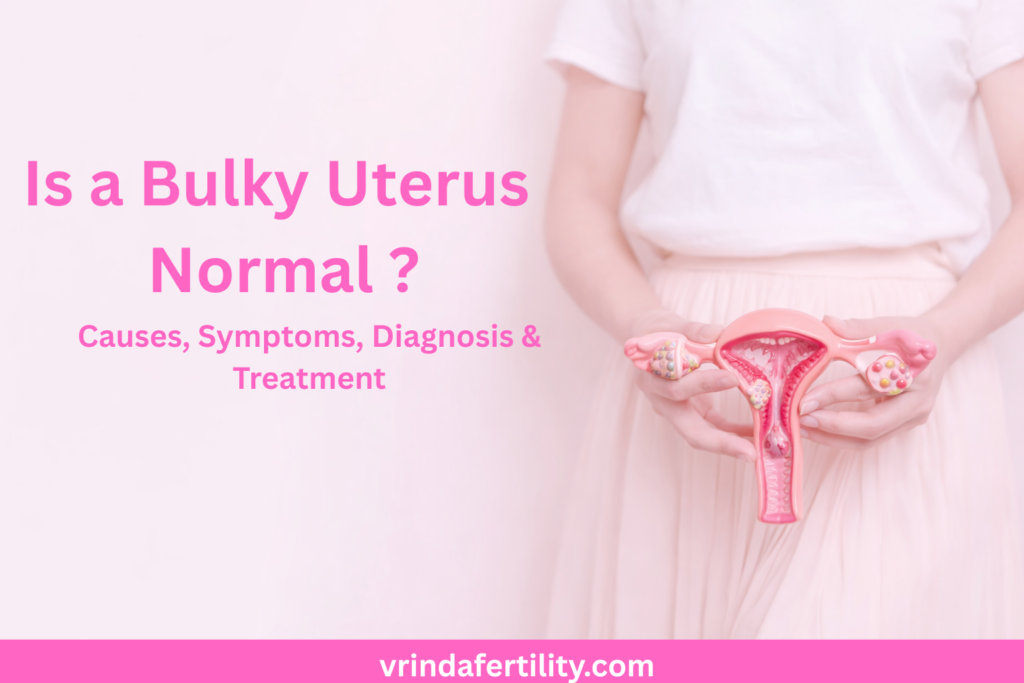
Being told during an ultrasound that you have a bulky uterus can be worrying. Many women immediately ask: Is a bulky uterus normal? Does it affect fertility? Is it dangerous?
The answer depends on the underlying cause, your age, symptoms, and reproductive goals. In some cases, a mildly enlarged uterus is completely normal. In others, it may indicate conditions such as fibroids, adenomyosis, or hormonal imbalance that require medical attention.
What Is a Bulky Uterus?
A bulky uterus refers to a uterus that is larger than the typical size expected for a woman’s age and reproductive stage.
Normal Uterus Size
In reproductive-age women, the uterus usually measures:
- Length: 7–9 cm
- Width: 4–5 cm
- Thickness: 2–4 cm
If imaging shows enlargement beyond this range, doctors may describe it as “bulky” or “enlarged.”
Important: A bulky uterus itself is not a disease. It is a clinical finding, and the actual concern depends on the cause behind the enlargement.
Is a Bulky Uterus Normal?
In certain situations, yes.
A bulky uterus may be considered normal when:
- You are in early pregnancy
- You recently delivered a baby
- You are approaching perimenopause
- The enlargement is mild and symptom-free
However, persistent enlargement without pregnancy may indicate an underlying gynecological condition that requires evaluation.
Common Causes of a Bulky Uterus
1. Uterine Fibroids (Most Common Cause)
Fibroids are non-cancerous growths that develop in the muscular wall of the uterus. They are a leading cause of bulky uterus, especially in women between 30–45 years.
Symptoms may include:
- Heavy or prolonged menstrual bleeding
- Pelvic pressure or pain
- Frequent urination
- Constipation
- Fertility challenges
Small fibroids may not need treatment, but larger ones can significantly enlarge the uterus.
2. Adenomyosis
Adenomyosis occurs when the inner uterine lining grows into the muscular wall of the uterus.
Common symptoms include:
- Severe menstrual cramps
- Heavy bleeding
- Chronic pelvic pain
- Enlarged and tender uterus
This condition often causes a uniformly enlarged (bulky) uterus and is more common in women over 35.
3. Hormonal Imbalance
High estrogen levels can stimulate excessive growth of uterine tissue, resulting in mild enlargement.
Hormonal issues linked to bulky uterus:
- PCOS
- Thyroid disorders
- Perimenopause
Correcting hormonal imbalance often helps manage symptoms.
4. Pregnancy
During early pregnancy, the uterus naturally enlarges to support fetal development. This is a completely normal and expected cause of a bulky uterus.
5. Endometrial Hyperplasia
Thickening of the uterine lining due to excess estrogen may also contribute to uterine enlargement and abnormal bleeding.
Symptoms of a Bulky Uterus
Some women have no symptoms at all. Others may experience:
- Heavy or prolonged periods
- Painful menstruation
- Pelvic pain or pressure
- Abdominal bloating
- Pain during intercourse
- Difficulty conceiving
If symptoms interfere with daily life, medical evaluation is recommended.
How Is a Bulky Uterus Diagnosed?
Diagnosis typically includes:
1. Pelvic Examination
A gynecologist may detect enlargement during a routine exam.
2. Ultrasound
Transvaginal ultrasound is the primary imaging test to assess:
- Uterine size
- Fibroids
- Adenomyosis
- Endometrial thickness
3. MRI (If Required)
MRI provides more detailed imaging when diagnosis is uncertain.
Does a Bulky Uterus Affect Fertility?
It depends entirely on the cause.
Fertility May Be Affected If:
- Fibroids distort the uterine cavity
- Adenomyosis interferes with embryo implantation
- Hormonal imbalance disrupts ovulation
Fertility May Not Be Affected If:
- Enlargement is mild
- There is no structural distortion
- There are no symptoms
A fertility evaluation helps determine whether treatment is necessary before attempting conception.
Treatment Options for Bulky Uterus
Treatment depends on the cause, symptom severity, and reproductive goals.
1. Observation (Watchful Waiting)
If there are no symptoms, doctors may recommend periodic monitoring.
2. Medications
- Hormonal therapy
- Birth control pills
- GnRH analogues
- Pain relief medications
These treatments may reduce symptoms but may not permanently shrink fibroids or adenomyosis.
3. Minimally Invasive Procedures
- Myomectomy (fibroid removal)
- Uterine artery embolization
- Hysteroscopic surgery
These procedures preserve the uterus and may improve fertility outcomes.
4. Advanced Fertility Treatment
If fertility is affected, assisted reproductive techniques may be recommended under specialist supervision.
When Should You See a Doctor?
Seek medical consultation if you experience:
- Extremely heavy bleeding
- Severe pelvic pain
- Rapid abdominal enlargement
- Difficulty conceiving
- Bleeding after menopause
Early diagnosis improves treatment success and protects reproductive health.
Can Lifestyle Changes Help?
Lifestyle changes may not directly shrink a bulky uterus but can help manage symptoms and regulate hormones:
- Maintain healthy body weight
- Follow a balanced, anti-inflammatory diet
- Exercise regularly
- Manage stress levels
- Treat thyroid conditions promptly
Frequently Asked Questions (FAQs)
1. Is a bulky uterus dangerous?
Not necessarily. It depends on the underlying cause. Many cases are benign and manageable.
2. Can a bulky uterus shrink naturally?
If caused by hormonal factors, it may reduce after menopause. Structural causes like fibroids usually require monitoring or treatment.
3. Can I get pregnant with a bulky uterus?
Yes, many women conceive naturally. Fertility depends on severity and underlying cause.
4. Is surgery always required?
No. Surgery is recommended only if symptoms are severe or fertility is compromised.
5. Does a bulky uterus mean cancer?
Rarely. Most causes are non-cancerous. Proper medical evaluation rules out serious conditions.
Expert Insight
A bulky uterus is a finding — not a final diagnosis. Proper imaging, hormonal evaluation, and fertility assessment are essential before deciding on treatment.
With modern gynecological care and personalized treatment plans, most women achieve symptom relief and successful pregnancy outcomes.
Conclusion
Sometimes yes. Sometimes it signals an underlying condition. The key is accurate diagnosis and timely care.
With early medical evaluation and appropriate treatment:
- Symptoms can be controlled
- Fertility can be preserved
- Complications can be prevented
If you have been diagnosed with a bulky uterus, consult an experienced gynecologist for a personalized treatment plan and peace of mind.
When performed at a trusted fertility center, offers a safe, effective, and scientifically proven path toward parenthood.At Vrinda Fertility, we personally guide every couple – bringing medical expertise, latest technology, and emotional support to realize your dream of becoming parents. Get Direction for Best IVF Centre In Delhi and Noida
What Is a Bulky Uterus?
A bulky uterus refers to a uterus that is larger than the typical size expected for a woman’s age and reproductive stage.
Normal Uterus Size
In reproductive-age women, the uterus usually measures:
- Length: 7–9 cm
- Width: 4–5 cm
- Thickness: 2–4 cm
If imaging shows enlargement beyond this range, doctors may describe it as “bulky” or “enlarged.”
Important: A bulky uterus itself is not a disease. It is a clinical finding, and the actual concern depends on the cause behind the enlargement.
Is a Bulky Uterus Normal?
In certain situations, yes.
A bulky uterus may be considered normal when:
- You are in early pregnancy
- You recently delivered a baby
- You are approaching perimenopause
- The enlargement is mild and symptom-free
However, persistent enlargement without pregnancy may indicate an underlying gynecological condition that requires evaluation.
Common Causes of a Bulky Uterus
1. Uterine Fibroids (Most Common Cause)
Fibroids are non-cancerous growths that develop in the muscular wall of the uterus. They are a leading cause of bulky uterus, especially in women between 30–45 years.
Symptoms may include:
- Heavy or prolonged menstrual bleeding
- Pelvic pressure or pain
- Frequent urination
- Constipation
- Fertility challenges
Small fibroids may not need treatment, but larger ones can significantly enlarge the uterus.
2. Adenomyosis
Adenomyosis occurs when the inner uterine lining grows into the muscular wall of the uterus.
Common symptoms include:
- Severe menstrual cramps
- Heavy bleeding
- Chronic pelvic pain
- Enlarged and tender uterus
This condition often causes a uniformly enlarged (bulky) uterus and is more common in women over 35.
3. Hormonal Imbalance
High estrogen levels can stimulate excessive growth of uterine tissue, resulting in mild enlargement.
Hormonal issues linked to bulky uterus:
- PCOS
- Thyroid disorders
- Perimenopause
Correcting hormonal imbalance often helps manage symptoms.
4. Pregnancy
During early pregnancy, the uterus naturally enlarges to support fetal development. This is a completely normal and expected cause of a bulky uterus.
5. Endometrial Hyperplasia
Thickening of the uterine lining due to excess estrogen may also contribute to uterine enlargement and abnormal bleeding.
Symptoms of a Bulky Uterus
Some women have no symptoms at all. Others may experience:
- Heavy or prolonged periods
- Painful menstruation
- Pelvic pain or pressure
- Abdominal bloating
- Pain during intercourse
- Difficulty conceiving
If symptoms interfere with daily life, medical evaluation is recommended.
How Is a Bulky Uterus Diagnosed?
Diagnosis typically includes:
1. Pelvic Examination
A gynecologist may detect enlargement during a routine exam.
2. Ultrasound
Transvaginal ultrasound is the primary imaging test to assess:
- Uterine size
- Fibroids
- Adenomyosis
- Endometrial thickness
3. MRI (If Required)
MRI provides more detailed imaging when diagnosis is uncertain.
Does a Bulky Uterus Affect Fertility?
It depends entirely on the cause.
Fertility May Be Affected If:
- Fibroids distort the uterine cavity
- Adenomyosis interferes with embryo implantation
- Hormonal imbalance disrupts ovulation
Fertility May Not Be Affected If:
- Enlargement is mild
- There is no structural distortion
- There are no symptoms
A fertility evaluation helps determine whether treatment is necessary before attempting conception.
Treatment Options for Bulky Uterus
Treatment depends on the cause, symptom severity, and reproductive goals.
1. Observation (Watchful Waiting)
If there are no symptoms, doctors may recommend periodic monitoring.
2. Medications
- Hormonal therapy
- Birth control pills
- GnRH analogues
- Pain relief medications
These treatments may reduce symptoms but may not permanently shrink fibroids or adenomyosis.
3. Minimally Invasive Procedures
- Myomectomy (fibroid removal)
- Uterine artery embolization
- Hysteroscopic surgery
These procedures preserve the uterus and may improve fertility outcomes.
4. Advanced Fertility Treatment
If fertility is affected, assisted reproductive techniques may be recommended under specialist supervision.
When Should You See a Doctor?
Seek medical consultation if you experience:
- Extremely heavy bleeding
- Severe pelvic pain
- Rapid abdominal enlargement
- Difficulty conceiving
- Bleeding after menopause
Early diagnosis improves treatment success and protects reproductive health.
Can Lifestyle Changes Help?
Lifestyle changes may not directly shrink a bulky uterus but can help manage symptoms and regulate hormones:
- Maintain healthy body weight
- Follow a balanced, anti-inflammatory diet
- Exercise regularly
- Manage stress levels
- Treat thyroid conditions promptly
Frequently Asked Questions (FAQs)
1. Is a bulky uterus dangerous?
Not necessarily. It depends on the underlying cause. Many cases are benign and manageable.
2. Can a bulky uterus shrink naturally?
If caused by hormonal factors, it may reduce after menopause. Structural causes like fibroids usually require monitoring or treatment.
3. Can I get pregnant with a bulky uterus?
Yes, many women conceive naturally. Fertility depends on severity and underlying cause.
4. Is surgery always required?
No. Surgery is recommended only if symptoms are severe or fertility is compromised.
5. Does a bulky uterus mean cancer?
Rarely. Most causes are non-cancerous. Proper medical evaluation rules out serious conditions.
Expert Insight
A bulky uterus is a finding — not a final diagnosis. Proper imaging, hormonal evaluation, and fertility assessment are essential before deciding on treatment.
With modern gynecological care and personalized treatment plans, most women achieve symptom relief and successful pregnancy outcomes.
Conclusion
Sometimes yes. Sometimes it signals an underlying condition. The key is accurate diagnosis and timely care.
With early medical evaluation and appropriate treatment:
- Symptoms can be controlled
- Fertility can be preserved
- Complications can be prevented
If you have been diagnosed with a bulky uterus, consult an experienced gynecologist for a personalized treatment plan and peace of mind.
When performed at a trusted fertility center, offers a safe, effective, and scientifically proven path toward parenthood.At Vrinda Fertility, we personally guide every couple – bringing medical expertise, latest technology, and emotional support to realize your dream of becoming parents. Get Direction for Best IVF Centre In Delhi and Noida