
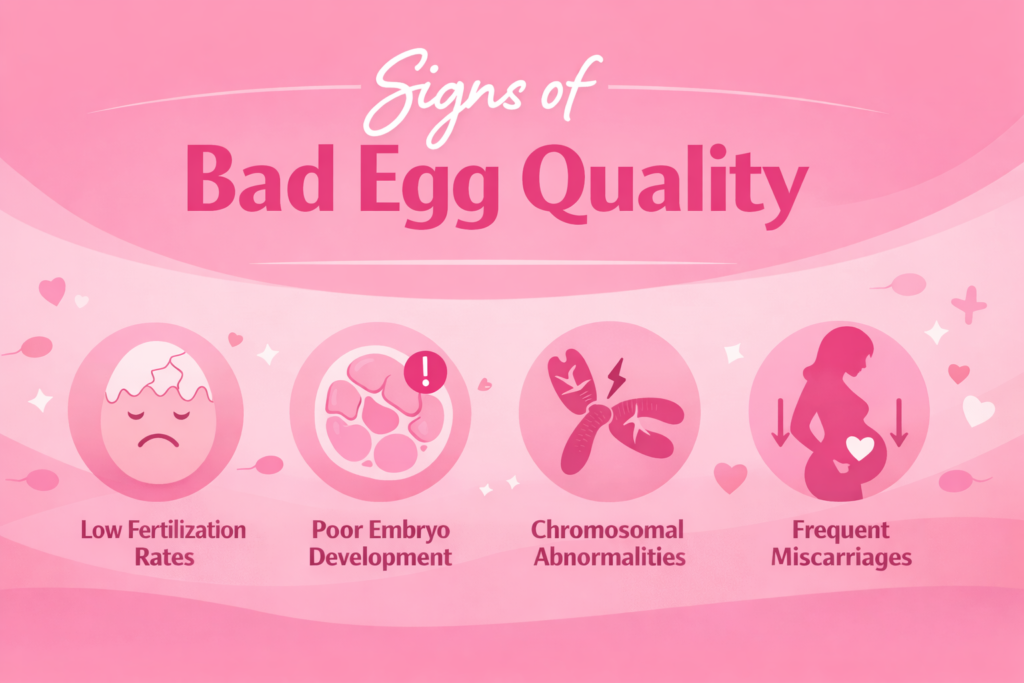
Sign of Bad Egg Quality plays a key role in female fertility, as healthy eggs are essential for conception and a successful pregnancy. Many women do not realize they have poor egg quality until they struggle to conceive or face repeated treatment failures. Recognizing these signs early can help in getting the right diagnosis and timely fertility care.
In this ultimate guide, fertility specialists discuss the common symptoms, reasons, diagnosis techniques, and treatment options for low-quality eggs, as per their knowledge and evidence-based fertility treatments.
What Is sign of low Egg Quality and Why Does It Matter?
Egg quality refers to the genetic health and developmental potential of a woman’s eggs (oocytes). High-quality eggs have the correct number of chromosomes and the ability to fertilize, implant, and develop into a healthy embryo.
A major sign of bad egg quality is reduced embryo formation or poor implantation even after fertilization. Egg quality naturally declines with age, but several medical and lifestyle factors can accelerate this process.
Top Sign of Bad Egg Quality You Should Not Ignore
Recognizing early warning signs can help prevent delayed diagnosis and fertility complications.
1. Difficulty Getting Pregnant
One of the most common sign of bad egg quality is inability to conceive despite regular, unprotected intercourse for over 6–12 months.
2. Repeated IVF or IUI Failure
Poor egg quality often results in:
- Low fertilization rate
- Poor embryo development
- Failed embryo implantation
This is a strong sign of bad egg quality in women undergoing assisted reproductive treatment.
3. Poor Embryo Grading
During IVF, embryos derived from poor-quality eggs often show slow growth, fragmentation, or chromosomal abnormalities.
4. Irregular Menstrual Cycles
Irregular or very short cycles may indicate hormonal imbalance or declining ovarian reserve—another important sign of bad egg quality.
5. Early Miscarriages
Genetically abnormal eggs increase the risk of early pregnancy loss, making recurrent miscarriage a serious sign of bad egg quality.
Medical Causes Behind Bad Egg Quality
Understanding the root causes improves treatment outcomes.
Age-Related Decline
After 35, both egg quantity and quality reduce significantly, making age the most significant sign of bad egg quality contributor.
Hormonal Imbalance
Conditions such as PCOS, thyroid disorders, and elevated FSH levels negatively affect egg maturation.
Low Ovarian Reserve
Low AMH levels and poor antral follicle count directly correlate with poor egg quality.
Lifestyle & Environmental Factors
- Smoking
- Excess alcohol
- Chronic stress
- Poor nutrition
- Exposure to toxins
All can worsen egg health and become a silent sign of bad egg quality.
How Is Bad Egg Quality Diagnosed?
Fertility specialists use advanced tests to assess egg quality indirectly:
- AMH Test – measures ovarian reserve
- FSH & Estradiol Levels
- Ultrasound (AFC)
- IVF Cycle Response Analysis
Although egg quality cannot be measured directly, consistent poor response in IVF cycles is considered a clinical sign of bad egg quality.
Treatment Options to Improve Egg Quality
While egg quality cannot be reversed, fertility experts can optimize outcomes.
Medical & Fertility Treatments
- Personalized IVF stimulation protocols
- Antioxidant and fertility supplements
- PRP therapy (ovarian rejuvenation)
- Donor egg IVF (in severe cases)
Lifestyle Improvements
- Balanced fertility diet
- Weight management
- Stress reduction
- Avoiding smoking and alcohol
Early intervention after identifying a sign of bad egg quality significantly improves pregnancy success.
Impact of Bad Egg Quality on IVF Success
Egg quality directly affects:
- Fertilization rate
- Embryo development
- Implantation success
- Live birth rate
Even with advanced technology, poor egg quality remains a leading cause of IVF failure. Recognizing the sign of bad egg quality early allows fertility specialists to tailor the most effective treatment plan.
When Should You Consult a Fertility Specialist?
You should seek expert fertility advice if:
- You are above 30 and trying for over 6 months
- You have repeated IVF failures
- You experience irregular cycles or miscarriages
- Tests indicate low AMH or poor ovarian reserve
A timely diagnosis of any sign of bad egg quality can save time, emotional stress, and treatment costs.
Conclusion: Take Action at the Right Time
Understanding each sign of bad egg quality empowers women to make informed fertility decisions. With expert diagnosis, advanced fertility treatments, and lifestyle modifications, successful pregnancy is still possible—even with compromised egg quality.
When performed at a trusted fertility center, offers a safe, effective, and scientifically proven path toward parenthood.At Vrinda Fertility, we personally guide every couple – bringing medical expertise, latest technology, and emotional support to realize your dream of becoming parents. Get Direction for Best IVF Centre In Delhi and Noida
Frequently Asked Questions (FAQ)
Yes, pregnancy is possible, but chances may be lower. Fertility treatments and lifestyle changes can help
Not always. Low AMH reflects egg quantity, but quality may still be adequate in some women.
Certain supplements may support egg health, but they should only be taken under medical supervision.
IVF can help, but success depends on age, egg health, and individual fertility factors.
Egg quality declines gradually after 30 and more rapidly after 35.