
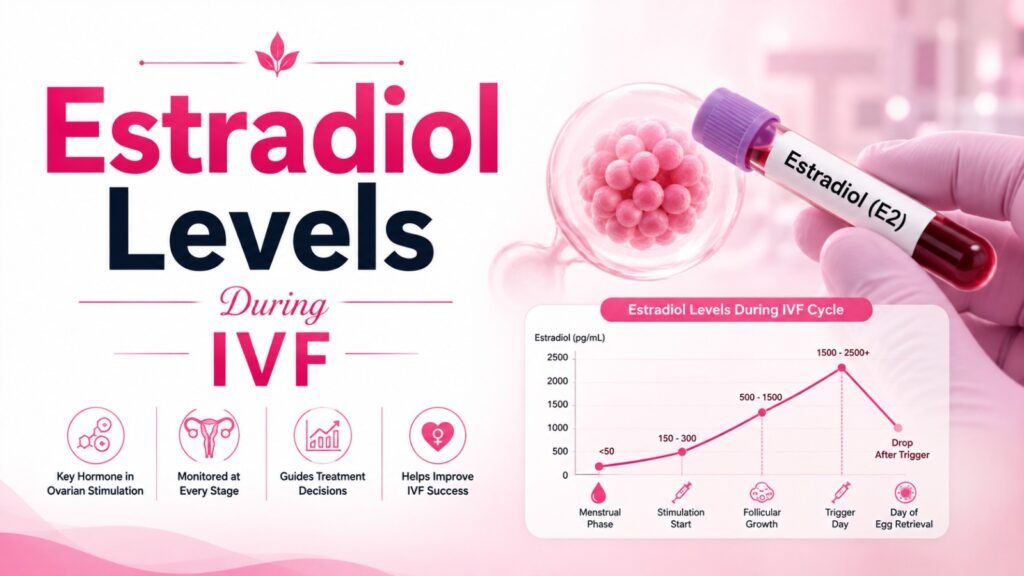
If you’re preparing for in vitro fertilization (IVF), you’ll likely hear your fertility specialist mention hormone levels several times throughout your treatment. Among the most important hormones monitored during an IVF cycle is estradiol (E2).
For many patients, seeing estradiol numbers rise or fluctuate can be confusing, especially when they’re unsure what those values actually mean. Is a higher level always better? What happens if it’s too low? Can abnormal Estradiol Levels During IVF affects IVF success?
Understanding estradiol levels can help you feel more informed and confident throughout your fertility journey. In this guide, we’ll ex plain what estradiol is, why it’s monitored during IVF, what the numbers indicate, and how fertility specialists use these measurements to optimize your treatment.
What Is Estradiol?
Estradiol is the primary form of estrogen produced by the ovaries during a woman’s reproductive years. It plays a crucial role in the menstrual cycle, egg development, ovulation, and preparing the uterus for pregnancy.
During an IVF cycle, fertility medications stimulate the ovaries to produce multiple mature eggs instead of the single egg typically released during a natural cycle. As these follicles grow, they produce increasing amounts of estradiol.
Because estradiol reflects ovarian activity, it serves as an important indicator of how well your ovaries are responding to stimulation.
Why Are Estradiol Levels Monitored During IVF?
Blood tests measuring estradiol are performed regularly throughout IVF treatment. These results help fertility specialists make informed decisions at every stage of the cycle.
Monitoring estradiol helps your doctor:
- Evaluate how your ovaries are responding to fertility medications.
- Estimate the number of developing follicles.
- Adjust medication dosages if necessary.
- Reduce the risk of ovarian hyperstimulation syndrome (OHSS).
- Determine the ideal timing for the trigger shot.
- Decide whether a fresh embryo transfer or frozen embryo transfer is the safest option.
Rather than relying on ultrasound alone, fertility specialists combine follicle measurements with estradiol levels to obtain a clearer picture of ovarian response.
How Estradiol Changes During an IVF Cycle
Estradiol levels naturally change as treatment progresses.
Before Ovarian Stimulation
At the beginning of your menstrual cycle, estradiol levels are generally low. Your fertility clinic checks these baseline levels before starting stimulation medications to ensure the ovaries are ready for treatment.
During Ovarian Stimulation
As fertility medications encourage multiple follicles to grow, estradiol levels steadily increase. Each growing follicle contributes to the overall estradiol concentration in your bloodstream.
The rate of increase is often more important than a single measurement because it shows whether the ovaries are responding appropriately.
Before Egg Retrieval
Estradiol levels typically reach their highest point just before the trigger injection. At this stage, the hormone reflects the presence of multiple mature follicles that are nearly ready for egg retrieval.
What Are Normal Estradiol Levels During IVF?
There is no single “ideal” estradiol number because levels vary depending on:
- Age
- Ovarian reserve
- Number of developing follicles
- Individual response to medications
- IVF protocol used
Instead of focusing on one specific value, fertility specialists assess estradiol trends alongside ultrasound findings.
For example:
- Lower levels may be expected in women with fewer developing follicles.
- Higher levels often indicate multiple mature follicles.
- Extremely elevated levels may increase the risk of ovarian hyperstimulation syndrome.
Every IVF journey is unique, so hormone levels should always be interpreted in the context of your overall treatment.
What Do High Estradiol Levels Mean?
High estradiol levels often indicate that the ovaries are responding well to stimulation and producing multiple follicles.
However, very high levels may also suggest an increased risk of complications.
Possible reasons for elevated estradiol include:
- Strong ovarian response
- A large number of developing follicles
- Polycystic ovary syndrome (PCOS)
- Higher risk of ovarian hyperstimulation syndrome (OHSS)
If estradiol rises too rapidly, your fertility specialist may:
- Reduce medication dosage.
- Monitor you more frequently.
- Delay the trigger shot.
- Recommend freezing all embryos for transfer in a later cycle.
These decisions are made to maximize both safety and pregnancy success.
What Do Low Estradiol Levels Mean?
Lower estradiol levels may indicate that the ovaries are responding more slowly to stimulation medications.
This does not necessarily mean IVF will fail.
Low estradiol may be associated with:
- Reduced ovarian reserve
- Fewer developing follicles
- Lower response to stimulation medications
- Individual hormonal variation
Your fertility specialist may adjust your medication dosage or continue monitoring before deciding whether any changes are needed.
Even patients with modest estradiol levels have successfully conceived through IVF.
Can Estradiol Predict IVF Success?
Estradiol is an important monitoring tool, but it cannot predict pregnancy on its own.
A successful IVF outcome depends on many factors, including:
- Egg quality
- Sperm quality
- Embryo quality
- Endometrial thickness
- Maternal age
- Overall reproductive health
- Laboratory conditions
- Embryo transfer technique
Although appropriate estradiol levels support healthy follicle development, they are only one piece of a much larger fertility picture.
Estradiol and Egg Quality
One common misconception is that higher estradiol levels automatically mean better-quality eggs.
In reality, estradiol mainly reflects the number of growing follicles rather than the quality of the eggs inside them.
Egg quality depends largely on:
- Age
- Genetics
- Ovarian health
- Lifestyle
- Overall reproductive function
Some women with moderate estradiol levels produce excellent-quality embryos, while others with very high levels may not.
Estradiol and the Uterine Lining
Estradiol also plays a key role in preparing the endometrium—the inner lining of the uterus.
As estradiol increases:
- The uterine lining thickens.
- Blood flow improves.
- The uterus becomes more receptive to embryo implantation.
Maintaining appropriate hormone levels helps create an optimal environment for pregnancy.
What Happens If Estradiol Levels Become Too High?
Excessively high estradiol levels can increase the likelihood of ovarian hyperstimulation syndrome (OHSS), a condition in which the ovaries become enlarged and fluid may accumulate in the abdomen.
Symptoms can include:
- Abdominal bloating
- Pelvic discomfort
- Nausea
- Rapid weight gain
- Shortness of breath in severe cases
Modern IVF protocols have significantly reduced the incidence of severe OHSS through careful monitoring and individualized treatment adjustments.
How Doctors Manage Abnormal Estradiol Levels
Fertility specialists closely monitor estradiol throughout treatment to ensure the safest possible outcome.
Depending on your hormone levels, your doctor may:
- Adjust medication doses.
- Change injection schedules.
- Increase blood test frequency.
- Modify the trigger medication.
- Recommend freezing embryos instead of immediate transfer.
- Delay embryo transfer until hormone levels normalize.
These personalized decisions are designed to improve both safety and the chances of a healthy pregnancy.
Can You Improve Estradiol Levels Naturally?
Estradiol production is largely influenced by ovarian function and fertility medications during IVF.
While no natural remedy can dramatically change estradiol levels during treatment, maintaining good overall health can support reproductive function.
Healthy habits include:
- Eating a balanced diet rich in fruits, vegetables, whole grains, and lean proteins.
- Maintaining a healthy body weight.
- Exercising moderately.
- Managing stress.
- Sleeping 7–9 hours each night.
- Avoiding smoking and excessive alcohol consumption.
- Following your fertility specialist’s instructions carefully.
Always consult your fertility doctor before taking supplements or herbal products during IVF.
When to Speak With Your Fertility Specialist
If you have concerns about your estradiol levels, don’t hesitate to ask your fertility team questions. Understanding your results can reduce anxiety and help you feel more engaged in your treatment.
Remember that IVF monitoring is highly individualized. Two patients with very different estradiol levels may both have successful outcomes.
Final Thoughts
Estradiol is one of the most valuable hormones monitored during IVF because it provides insight into how your ovaries are responding to treatment. While the numbers themselves can seem intimidating, they are only one part of a comprehensive evaluation.
Rather than focusing on a specific value, trust your fertility specialist to interpret your hormone levels alongside ultrasound findings and other important clinical factors. Regular monitoring allows your treatment plan to be adjusted as needed, helping improve safety while maximizing the chances of success.
If you’re considering IVF or have questions about your fertility health, choosing an experienced fertility team can make all the difference. A personalized treatment plan, advanced reproductive technology, and compassionate guidance ensure that every stage of your journey is carefully managed. Early consultation with a qualified fertility specialist can help you better understand your options and take the next confident step toward building your family.
Frequently Asked Questions (FAQ)
Estradiol levels vary throughout IVF treatment depending on follicle development, ovarian response, and the treatment protocol. Your fertility specialist interprets the results alongside ultrasound findings.
Very high estradiol levels may increase the risk of ovarian hyperstimulation syndrome (OHSS). Your doctor may adjust medications or recommend freezing embryos before transfer.
No. Low estradiol levels do not necessarily indicate treatment failure. Many successful IVF pregnancies occur despite lower hormone levels.
Estradiol helps doctors evaluate ovarian response, monitor follicle growth, determine the timing of the trigger shot, and reduce the risk of complications.