
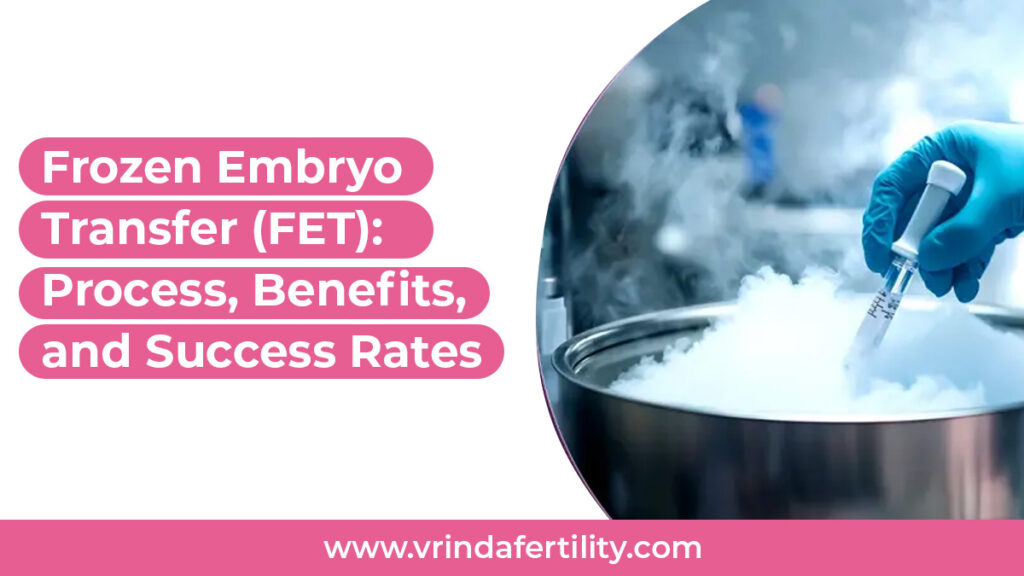
Assisted reproductive technologies now include Frozen Embryo Transfers (FET) as one of the most exciting new options. As part of In Vitro Fertilization (IVF), embryos that were previously frozen and now thawed to implant into the uterus. Pregnancy naturally follows.
Recent advancements in cryopreservation techniques like Vitrification have increased success rates for FET. This rise in success rates has led to many fertility clinics around the globe adopting this as one of the options for FET. This incredible new opportunity as one of the options for integral FET services. This booklet will explore the FET services and the various benefits and risks that come along with FET and will provide some success rate information that will assist in and guide your decision making.
What is Frozen Embryo Transfer (FET)?
The FET technique is a fertility treatment approach that entails freezing embryos formed earlier by the IVF procedure and keeping them for future use in another procedure. The thawing and subsequent implantation of one or more embryos takes place during a scheduled cycle when the woman is prepared.
The difference between FET and a fresh embryo transfer lies in the period given by the body to recover from stimulation of the ovaries.
Steps of Frozen Embryo Transfer Procedure:
1.Initial Consultation and Preparation:
The doctor will examine your health history, prior IVF treatments, and your womb. You may be subjected to hormonal tests and ultrasounds for an evaluation of your condition.
2.Uterine Lining Development:
The uterus lining is primed for embryo implantation, and this is done in various ways:
- Natural Cycle FET – depends on natural ovulation in the body
- Hormone Replacement Treatment (HRT) – involves estrogen and progesterone
3.Embryo Thawing:
Embryos need to be thawed with utmost care in a laboratory setting using highly advanced equipment. This technique has been perfected, making sure that a majority of embryos survive the thawing process.
4.Embryo Transfer
The embryo is transferred into the womb with the aid of a thin tube. It is a pain-free process and is completed within a short period.
5.Post-transfer care
The patient may be recommended to continue their hormonal therapy and avoid any strenuous exercise. A pregnancy test can be done 10-14 days following the transfer procedure.
Advantages of Frozen Embryo Transfer:
1.Increased Flexibility
Patients are able to determine when they want to get pregnant using FET without any stress.
2.Enhanced Uterine State
Separating FET from egg collection allows for an improved state of the uterine lining.
3.Decreased Chance of OHSS
OHSS is less likely to occur during FET because of no use of IVF drugs.
4.Economical Procedure
The necessity for multiple egg retrieval does not exist when frozen embryos are used.
5.Opportunity to Screen Embryos
Pre-implantation diagnosis allows patients to ensure the health of their offspring.
Risks and Precautions:-
Though FET is usually a safe procedure, certain risks include:
- Multiple pregnancies if multiple embryos are transferred
- Low possibility of damage to embryos while thawing and freezing
- Emotional stress due to waiting times
- Side effects of hormones (in hormone-induced procedures)
It is crucial to speak with a fertility expert for a personal risk-benefit analysis.
Success Rates of FET Procedures:-
The success rate of FET procedures can be affected by the following considerations:
Age of the Mother:-
Young mothers tend to have high success rates owing to good quality eggs.
Embryo Quality:-
High-quality embryos greatly increase the chances of implantation.
Uterine Well-being:-
Good uterine well-being is essential for successful implantation.
Expertise of the Clinic:-
Well-trained clinics with superior laboratory practices produce higher success rates.
Success Rates Based on Average Cases:-
- Age Under 35 years: 50-60% per transfer
- Age 35-37 years: 40-50%
- Age 38-40 years: 30-40%
- Age Over 40 years: 15-25%
These success rates may differ based on the individual patient’s case.
How to Increase the Chance of Successful FET?
- Eat well-balanced meals and keep your body mass index within normal limits.
- Stop smoking and drinking.
- Reduce stress by using relaxation
Conclusion
FET or Frozen Embryo Transfer technology has greatly changed fertility treatments through flexible treatment plans, safety and efficiency. This procedure has continued to advance, and now forms one of the most efficient assisted reproductive technology practices available today.
If you are interested in undergoing FET after IVF, learning about the process and its success rates can help you make the best decisions possible for achieving pregnancy.
Frequently Asked Questions (FAQ)
Ans. not at all, as FET is a simple, non-invasive process which causes no pain.
Ans. FET takes about 3 to 4 weeks, varying with the technique employed for FET.
Ans. Absolutely,as the freezing process today is advanced enough to make frozen embroys just as effective as fresh embroys.
Ans. Only 1 to 2 embryos are used to transfer so that multiple pregnancy is avoided.