
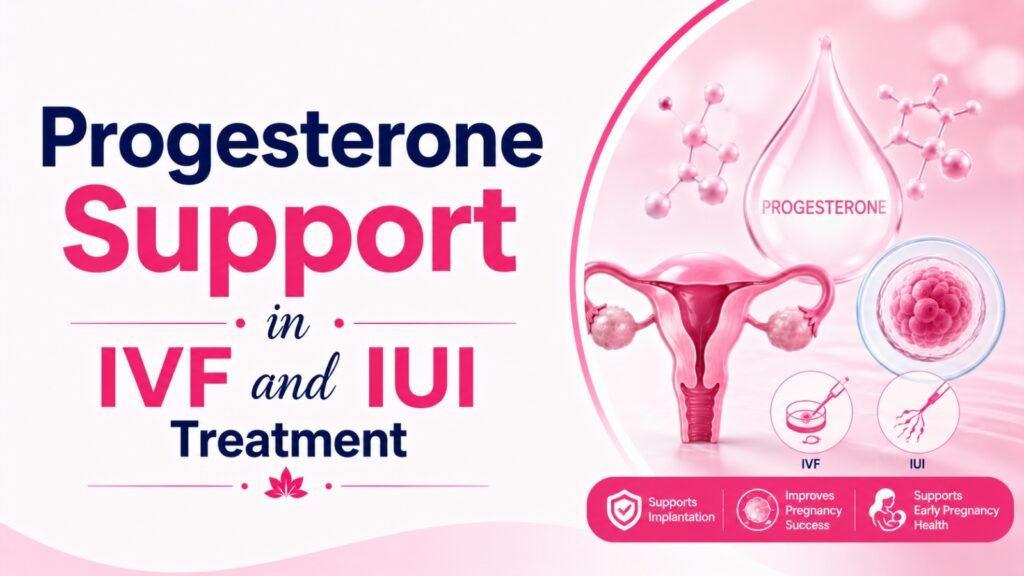
Infertility treatments like IVF and IUI have made dreams of parenthood come true for millions. However, like many other medical procedures, the success of these techniques relies on several additional factors. One such supporting factor is progesterone support in IVF and IUI treatment.
Progesterone is often called the “pregnancy hormone” as it is vital to both the preparation of the uterus for the implantation of the embryo and the maintenance of the early stages of pregnancy. Even the most clinically healthy of embryos may find implantation a struggle in the absence of sufficient levels of progesterone.
This blog will discuss the importance of progesterone in fertility treatments, along with the mode of administration, benefits, and side effects of progesterone support, and the related expectations of patients.
What Is Progesterone?
Progesterone is an endogenous hormone that is primarily produced in the ovaries after ovulation. During pregnancy, production is assumed by the placenta after the first trimester.
Progesterone is vital to multiple functions, including:
– Preparation of the uterine lining (endometrium) for embryo implantation
– Support of the early pregnancy and development of the embryo
– Prevention of premature contractions of the uterus
– Maintenance of a healthy pregnancy until the placenta develops fully
In assisted reproductive treatments, the body’s natural levels of progesterone are often inadequate, thus support becomes necessary.
Why Is Progesterone Support Important in IVF?
Fertility medications in an IVF cycle stimulate the ovaries to produce multiple ova. Some hormone-producing cells are also affected during the retrieval of these ova, causing a further decrease in the body’s natural levels of progesterone.
This is why progesterone support in IVF and IUI treatment is important, especially for IVF.
Progesterone supplementation:
– Supports pregnancy in the early stage
– Reduces the chances of pregnancy loss
– Increases a live birth
A lining that is inadequate in progesterone is less receptive and more likely to reject an embryo.
Is Progesterone Support Required in IUI?
While many IUI cycles do not require progesterone support, many professionals provide it in the following cases:
– Induction of ovulation
– Endocrine disorders
– Previous pregnancy loss
– Inadequate endometrium
– Low progesterone
– Infertility without a cause.
Post IUI treatment progesterone support makes the lining of the uterus more hospitable for the implantation of an embryo.
What Role Does Progesterone Play in Implantation?
Once the embryo is fertilized it travels to the uterus and implants on the lining.
Progesterone:
– Enhances the endometrial lining
– Increases the blood flow to the lining
– Supports attachment of the embryo
– Prevents excessive contractions of the uterus
– Maintains the hormonal stability
This makes progesterone one of the critical hormones during the two-week wait period after IUI and IVF.
What Are the Various Forms of Progesterone in IVF and IUI?
Depending on the treatment plan and the patient’s medical history, progesterone support may be offered in several forms.
1. Vaginal Progesterone
This is one of the most common forms of progesterone.
Available as:
- Vaginal suppositories
- Vaginal tablets
- Vaginal gel
Advantages:
- Direct delivery to the uterus
- Fewer systemic side effects
- Easy to use
2. Progesterone Injections
Intramuscular progesterone injections deliver hormones in a consistent manner. Benefits include:
- Reliable absorption
- Luteal phase support
- Often used after embryo transfer
Some women experience soreness at the injection site.
3. Oral Progesterone
Oral progesterone is an easy way to support the luteal phase, but may not be as consistent as vaginal or injectable progesterone.
Oral progesterone is prescribed at the discretion of the doctor.
When Does Progesterone Support Begin?
Timing of progesterone support varies depending on the type of fertility treatment.
During IVF
Progesterone support starts on the day of egg retrieval, the day after egg retrieval, or prior to embryo transfer. Support can continue until the pregnancy test or the first 10-12 weeks of the pregnancy.
During IUI
Progesterone support starts on the day of ovulation, the day of insemination, or after the completion of the fertility medications. Timing of support and duration are based on the outcome of the pregnancy and the recommendations of the doctor.
Benefits of Progesterone Support in IVF and IUI Treatment
The benefits of progesterone support in IVF and IUI treatment programs extend beyond implantation.
Successful Implantation
A receptive uterine lining significantly increases the likelihood of embryo implantation.
Pregnancy Outcomes
Studies show that assisted reproductive techniques lead to improved pregnancy rates when combined with adequate progesterone supplementation.
Reduced Early Pregnancy Loss
During the early weeks of pregnancy, progesterone works to support and stabilize the uterine environment.
Hormonal Stability
Supplementation helps counteract the decline of natural progesterone that occurs after ovarian stimulation.
Increased Live Birth Rates
In IVF cycles, adequate support for the luteal phase has been shown to increase rates of live birth.
Common Side Effects of Progesterone
Progesterone is generally well-tolerated by women.
Common side effects include:
– Mild bloating
– Tenderness in the breast
– Fatigue
– Lability of mood
– Drowsiness
– Vaginal discharge (with vaginal formulations)
– Discomfort at the site of injection (with injections)
These effects are usually transient and are commonly seen in early pregnancy.
Patients are encouraged to report severe pain, suspected allergic reactions, and any other symptoms that seem out of the ordinary.
Effects of Skipping a Dose of Progesterone on Treatment?
The most important factor is to maintain consistency.
Skips in dosing may result in reduced levels of progesterone, which may impact support of implantation and pregnancy.
If a dose is missed:
– It should be taken as soon as possible (in accordance with the normal dosing rules).
– The dose should not be doubled the following day.
– The fertility clinic should be contacted for further support.
The prescribing doctor’s instructions should be followed exactly.
Lifestyle Recommendations While on Progesterone
Maintaining healthy habits during fertility treatment can be naturally supportive to overall reproductive health.
Suggested practices include:
– Follow all medication instructions exactly.
– Maintain a healthy, well-balanced diet.
– Drink enough water.
– Sleep enough.
– Manage stress levels with meditation or gentle range of motion exercises.
– Stop using tobacco and alcohol products.
– Go to all needed follow-up appointments.
Lifestyle adaptations reinforce the benefits of prescribed medicines while enhancing quality of life for the patient.
Conclusion
Progesterone support in IVF and IUI treatment is a cornerstone of fertility medicine today. By optimizing the uterine lining and sustaining the early stages of pregnancy, progesterone support acts to improve the outcome of all fertility treatments.
Progesterone supplements are administered in different forms, including vaginal, oral, and injectable. Each type must be taken under the exact instructions of a fertility specialist. Taking progesterone helps create favourable conditions for the implantation of an embryo and for the development of the embryo at early stages. However, progesterone does not ensure there will be a pregnancy.
If you are undergoing IVF or IUI, talk to your fertility doctor regarding the details of your progesterone protocol and the progesterone best suited to your treatment (whether in dosage, duration, or method of administration). Progesterone support, when given under the guidance of an expert doctor, coupled with a proper medication regimen and a healthy lifestyle, can be a valuable aid towards achieving a successful pregnancy.
Frequently Asked Questions (FAQ)
Not necessarily. Although progesterone optimizes the uterine environment for implantation, a successful pregnancy is dependent on many other factors including the quality of the embryo, maternal health, age, and other fertility determinants.
Should pregnancy occur, progesterone is typically continued until approximately 10–12 weeks of pregnancy, when the placenta assumes the role of hormone production. The fertility specialist will determine the exact timing.
Pulses via vaginal delivery are typically convenient and comfortable for the majority of patients. Soreness and discomfort may occur at the site of an intramuscular injection, but is typically mild and short-lived.
Progesterone will not create a pregnancy, but it may cause a delay in normal menstruation and lead to the assumption of a pregnancy. Please follow the appropriate guidelines outlined by your clinic when performing a pregnancy test.