
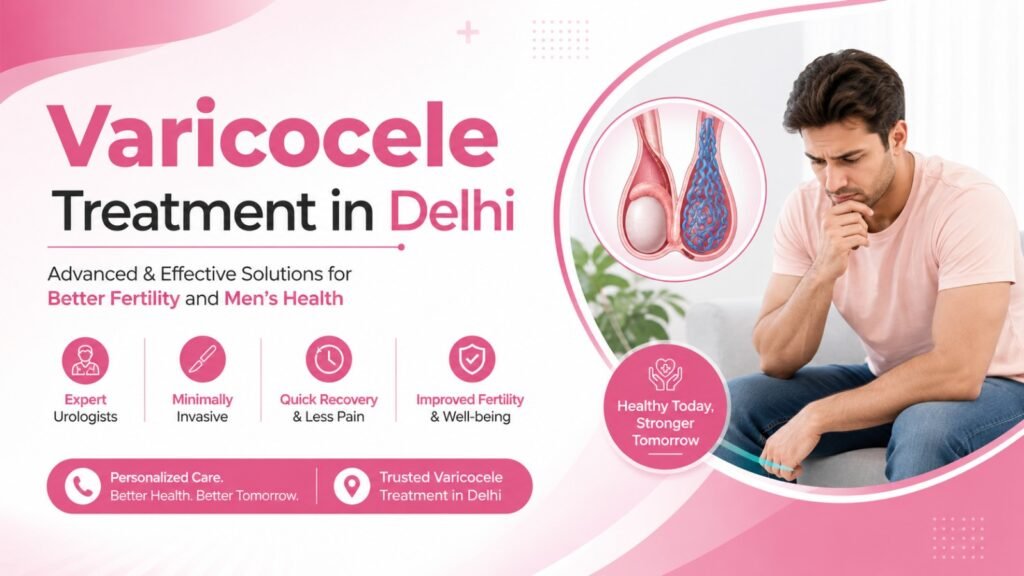
If you and your partner have been trying to conceive for over a year without a clear explanation, varicocele is a condition most couples overlook — even though it’s one of the most common and most treatable causes of male infertility. The right varicocele treatment in Delhi can significantly improve sperm quality, helping many couples move toward natural conception or a more successful fertility treatment outcome.
In this guide, we’ll cover what varicocele is, how it affects male fertility, and what treatment looks like in Delhi.
What Is a Varicocele Treatment in Delhi
A varicocele is a vascular condition in which the veins inside the scrotum (the pampiniform plexus) become enlarged and twisted — similar to varicose veins in the legs. This condition is found in roughly one in five adult men, and the figure is significantly higher among men experiencing infertility.
Most varicoceles develop on the left side, because the drainage angle of the left testicular vein differs from the right. The condition typically develops around puberty, but symptoms often go unnoticed until a couple undergoes a fertility evaluation.
The Connection Between Varicocele and Male Infertility
Research
Varicocele Treatment in Delhi
consistently shows a strong link between varicocele and poor semen quality. There is a well-established consensus that varicocele is associated with poor semen parameters, and that repairing it improves both semen and sperm DNA quality. Here are the key ways this connection plays out:
- Varicoceles are present in more than 40% of men with primary infertility, and this figure increases with age
- A varicocele can raise testicular temperature, which negatively affects sperm production and quality
- It is also linked to elevated sperm DNA fragmentation and hypogonadism (low testosterone)
- On physical examination, doctors may find testicular hypotrophy (a smaller testicle), impaired spermatogenesis (low or absent sperm count), reduced sperm motility, and abnormal sperm morphology
In simple terms — a varicocele disrupts scrotal temperature and blood flow, which can affect sperm count, motility, and shape all at once.
Symptoms of Varicocele
In most cases, a varicocele causes no obvious symptoms, which is why it often goes undetected until a fertility workup. When symptoms are present, they may include:
- A dull ache or heaviness in the scrotum, especially after standing for long periods
- One testicle appearing noticeably smaller than the other
- Visible or palpable enlarged veins in the scrotum (sometimes described as a “bag of worms”)
- Incidental detection during an infertility evaluation
How Is Varicocele Diagnosed?
Reputable fertility and andrology clinics in Delhi typically follow these steps to diagnose a varicocele:
- Physical examination — checking the scrotum while standing and during a Valsalva maneuver (gentle straining)
- Scrotal Doppler ultrasound — to confirm the varicocele grade, vein diameter, and reflux
- Semen analysis (per WHO criteria) — to assess sperm count, motility, and morphology
- Hormonal evaluation — testosterone and FSH levels, where needed
Varicocele Treatment in Delhi
Delhi offers several varicocele treatment options, and the right one depends on severity and the patient’s individual condition:
1. Microsurgical Varicocelectomy
This is considered the gold standard treatment. The affected veins are removed or tied off using microsurgical technique, restoring healthy blood flow. Clinical evidence confirms that varicocelectomy is an effective method for treating male infertility, leading to improved semen quality and better chances of natural conception — with the microsurgical approach preferred for its highest efficacy and lowest complication rate.
2. Varicocele Embolization
This is a minimally invasive, radiological technique in which a catheter is used to block the affected vein. It’s a newer technique, but it can carry a higher recurrence rate and cost compared to surgery.
3. Medical/Antioxidant Therapy
In some cases, especially before or after surgery, antioxidant supplements are recommended to support sperm quality — though their effectiveness has shown variable results across studies.
What to Expect After Treatment
Sperm parameters typically take 3 to 6 months to improve after varicocelectomy, since that’s roughly how long a full sperm production cycle takes. Recent clinical studies support this — measurable improvements in sperm count have been observed in infertile men following microsurgical varicocelectomy.
If natural conception still doesn’t occur, fertility treatments like IUI or IVF/ICSI tend to have significantly better outcomes after varicocele treatment, since sperm quality has already improved.
Why Choosing the Right Clinic in Delhi Matters
The success of varicocele treatment depends heavily on the surgeon’s expertise and the clinic’s facilities. A good varicocele treatment in Delhi should offer:
- An experienced andrologist/urologist trained in microsurgical varicocelectomy
- Advanced Doppler ultrasound and an in-house semen analysis lab
- Coordination with fertility specialists, for a seamless transition to ART (IUI/IVF/ICSI) if needed
- Proper post-surgery follow-up and semen parameter tracking
Frequently Asked Questions
Does varicocele always cause infertility? No — not every varicocele is clinically significant. However, it’s a common finding among infertile men, and treatment has been shown to improve semen quality in many cases.
How much do pregnancy chances improve after varicocele surgery? Study results are mixed, but overall evidence points toward better sperm quality and higher pregnancy/live birth rates after surgery, particularly when the varicocele is clinically significant.
How long is the recovery after varicocele treatment? Microsurgical varicocelectomy is typically a day-care procedure, and most patients resume normal activities within 1–2 weeks. Sperm quality improvements can take 3–6 months to show up in semen analysis.
Will I still need IVF after varicocele treatment? It depends on the individual case. Many couples conceive naturally after varicocele treatment, while others may still need IUI or IVF/ICSI depending on other fertility factors.
Which specialist should I see for varicocele treatment in Delhi? An andrologist or urologist experienced specifically in male infertility and microsurgical varicocelectomy — ideally one connected to a clinic with fertility specialists on staff.
Final Thoughts
Varicocele Treatment in Delhi is one of the few causes of male infertility that is genuinely treatable. Timely diagnosis and the right treatment make a real difference. If you or your partner are dealing with infertility and have noticed any scrotal discomfort or visible vein enlargement, consulting an experienced varicocele treatment centre in Delhi should be your first step. The right treatment can improve not just sperm quality, but also the odds of natural conception and better outcomes with assisted reproductive treatments.
Varicocele Treatment in Delhi by vrinda fertility.
Experience compassionate care and high success rates at Vrinda Fertility, recognized as the best Varicocele Treatment in Delhi: click here