
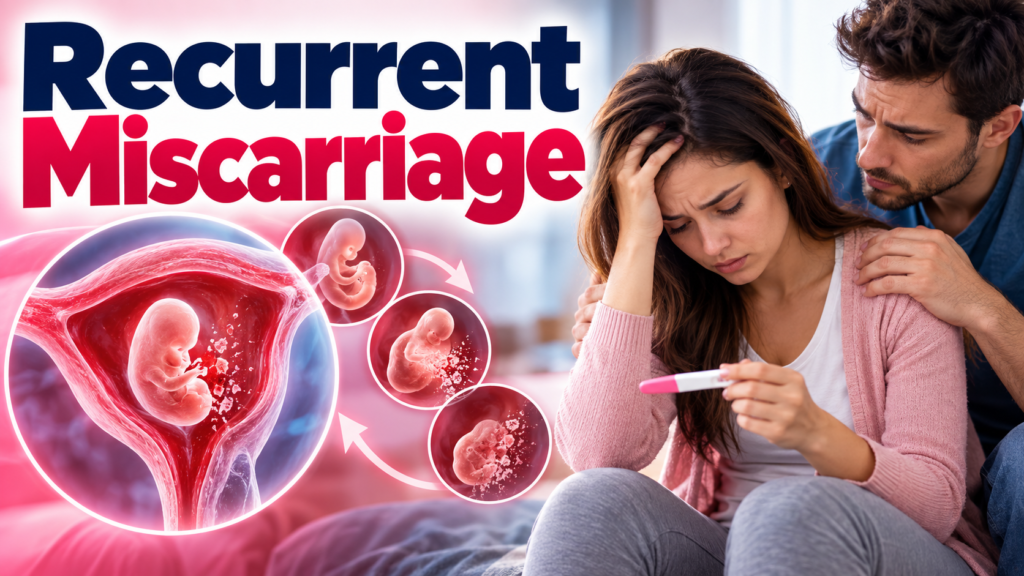
recurrent-miscarriage
गर्भावस्था की शुरुआत में miscarriage यानी गर्भपात होना किसी भी महिला और परिवार के लिए भावनात्मक रूप से कठिन अनुभव हो सकता है। लेकिन जब गर्भपात एक से अधिक बार हो, तो मन में कई सवाल उठना स्वाभाविक है—आखिर ऐसा क्यों हो रहा है? क्या शरीर में कोई समस्या है? क्या अगली pregnancy सुरक्षित हो सकती है? और क्या इसका कोई इलाज संभव है?
इसी स्थिति को समझने के लिए recurrent-miscarriage या recurrent pregnancy loss शब्द का इस्तेमाल किया जाता है। अलग-अलग medical guidelines में इसकी परिभाषा थोड़ी अलग हो सकती है। कुछ guidelines दो या अधिक pregnancy losses के बाद evaluation पर विचार करती हैं, जबकि कुछ तीन या अधिक miscarriages को recurrent miscarriage मानती हैं।
बार-बार miscarriage होने का मतलब यह नहीं है कि भविष्य में healthy pregnancy संभव नहीं होगी। कई मामलों में जांच के बावजूद कोई निश्चित कारण नहीं मिलता और फिर भी आगे चलकर सफल pregnancy हो सकती है। इसलिए recurrent-miscarriage के बाद सही evaluation, उचित medical guidance और personalized treatment plan महत्वपूर्ण होते हैं।
इस लेख में हम recurrent-miscarriage के संभावित कारण, जरूरी tests, treatment options, lifestyle factors और अगली pregnancy की तैयारी के बारे में विस्तार से समझेंगे।
recurrent-miscarriage क्या है?
recurrent-miscarriage का अर्थ है pregnancy का बार-बार loss होना। Medical terminology में इसे recurrent pregnancy loss (RPL) भी कहा जाता है।
Miscarriage pregnancy के दौरान कई कारणों से हो सकता है। एक बार miscarriage होना relatively common है और इसका कारण हमेशा कोई गंभीर बीमारी नहीं होता। कई early miscarriages embryo में होने वाली random chromosomal abnormalities के कारण हो सकते हैं।
लेकिन जब pregnancy loss बार-बार होता है, तो डॉक्टर underlying causes की जांच करने की सलाह दे सकते हैं।
Recurrent-miscarriage की evaluation में महिला और उसके partner दोनों की medical और reproductive history को ध्यान में रखा जा सकता है। इसमें previous pregnancies, miscarriage का समय, ultrasound reports, blood tests, family history और किसी existing medical condition की जानकारी महत्वपूर्ण होती है।
recurrent-miscarriage के प्रमुख कारण क्या हो सकते हैं?
recurrent-miscarriage का कोई एक कारण नहीं होता। अलग-अलग couples में अलग factors भूमिका निभा सकते हैं। कुछ मामलों में एक कारण स्पष्ट रूप से सामने आता है, जबकि कई मामलों में सभी जांचों के बाद भी कारण unexplained रह सकता है।
1. Chromosomal abnormalities
Early pregnancy loss का एक common कारण embryo में chromosomal abnormality हो सकता है।
Embryo के विकास के दौरान chromosomes की संख्या या structure में abnormality होने पर pregnancy आगे विकसित नहीं हो पाती। ऐसी abnormalities कई बार random होती हैं और इसका अर्थ यह नहीं है कि माता या पिता में कोई गंभीर genetic disease है।
हालांकि, कुछ couples में किसी एक partner में balanced chromosomal rearrangement हो सकता है। व्यक्ति स्वयं पूरी तरह healthy हो सकता है, लेकिन कुछ pregnancies में embryo के chromosomes असंतुलित हो सकते हैं।
इसी कारण recurrent-miscarriage की स्थिति में कुछ patients के लिए genetic counselling और chromosome-related testing पर विचार किया जा सकता है।
2. Maternal age
Pregnancy के साथ age भी miscarriage risk को प्रभावित कर सकती है। उम्र बढ़ने के साथ eggs में chromosomal abnormalities की संभावना बढ़ सकती है।
इसका मतलब यह नहीं है कि अधिक उम्र में healthy pregnancy संभव नहीं है। बल्कि age को दूसरे factors जैसे ovarian reserve, fertility history, previous pregnancy outcomes और overall health के साथ देखकर समझना चाहिए।
यदि age-related factors recurrent-miscarriage evaluation में relevant हों, तो fertility specialist individual circumstances के अनुसार आगे की testing और treatment options समझा सकते हैं।
3. Antiphospholipid syndrome
Antiphospholipid syndrome, जिसे APS भी कहा जाता है, एक autoimmune condition है जो blood clotting और pregnancy complications से जुड़ी हो सकती है।
कुछ patients में APS recurrent pregnancy loss से associated हो सकता है। इसलिए appropriate cases में antiphospholipid antibodies की blood testing की जा सकती है।
यदि APS confirm होता है, तो pregnancy के दौरान doctor low-dose aspirin और heparin जैसी medicines की सलाह दे सकते हैं। इन दवाओं का इस्तेमाल केवल medical supervision में किया जाना चाहिए।
हर recurrent-miscarriage patient को blood thinner की जरूरत नहीं होती। Treatment हमेशा diagnosis और individual medical history के आधार पर होना चाहिए।
4. Uterus की structural problems
Uterus की anatomy भी pregnancy के outcome में महत्वपूर्ण भूमिका निभा सकती है।
कुछ uterine conditions pregnancy loss से associated हो सकती हैं, जैसे:
- Uterine septum
- कुछ congenital uterine abnormalities
- कुछ fibroids
- Uterine cavity में adhesions या scar tissue
- अन्य structural abnormalities
Recurrent-miscarriage की evaluation में pelvic ultrasound या अन्य appropriate uterine imaging की सलाह दी जा सकती है।
अगर कोई structural problem मिलती है, तो treatment उसकी type, location और pregnancy पर संभावित प्रभाव के आधार पर तय किया जाता है।
5. Thyroid और hormonal problems
Thyroid disorders pregnancy और reproductive health को प्रभावित कर सकते हैं। इसलिए recurrent-miscarriage evaluation में thyroid function की जांच कुछ patients के लिए महत्वपूर्ण हो सकती है।
कुछ परिस्थितियों में diabetes या अन्य endocrine conditions की भी जांच की जा सकती है।
हालांकि हर patient के लिए एक जैसा hormone panel जरूरी नहीं होता। डॉक्टर symptoms, medical history और previous pregnancy outcomes के आधार पर appropriate tests चुनते हैं।
6. Diabetes और metabolic conditions
Uncontrolled diabetes pregnancy complications का risk बढ़ा सकता है। इसलिए यदि patient को diabetes है या medical history इसके लिए संकेत देती है, तो pregnancy से पहले blood sugar control और appropriate testing महत्वपूर्ण हो सकती है।
Healthy preconception planning recurrent-miscarriage management का एक हिस्सा हो सकती है, खासकर तब जब कोई underlying medical condition पहले से मौजूद हो।
recurrent-miscarriage में कौन-कौन से tests किए जा सकते हैं?
हर patient को सभी tests की आवश्यकता नहीं होती। Evaluation को individual history के अनुसार personalize किया जाता है।
Pregnancy tissue का chromosome testing
यदि miscarriage के बाद pregnancy tissue उपलब्ध हो और testing clinically appropriate हो, तो chromosome analysis से यह पता लगाने में मदद मिल सकती है कि pregnancy loss chromosomal abnormality से associated था या नहीं।
यह जानकारी future evaluation को guide करने में उपयोगी हो सकती है।
Blood tests
Medical history के आधार पर डॉक्टर निम्नलिखित में से कुछ tests की सलाह दे सकते हैं:
- Antiphospholipid antibodies
- Thyroid function tests
- Thyroid antibodies, यदि clinically indicated हों
- Diabetes-related testing
- कुछ specific hormonal tests
इन tests का उद्देश्य हर possible बीमारी ढूंढना नहीं, बल्कि ऐसे factors identify करना है जिनका treatment pregnancy planning में उपयोगी हो सकता है।
Uterus की जांच
Uterus की structure और cavity को evaluate करने के लिए ultrasound एक common investigation है।
कुछ situations में डॉक्टर additional imaging या uterine cavity assessment की सलाह दे सकते हैं।
कौन-सी जांच सबसे appropriate होगी, यह previous reports और clinical history पर निर्भर करता है।
Genetic testing
यदि pregnancy tissue में chromosomal abnormality सामने आती है या family history और pregnancy history genetic concern की ओर संकेत करती है, तो genetic counselling useful हो सकती है।
कुछ cases में दोनों partners का chromosome testing भी consider किया जा सकता है।
Genetic testing के परिणामों को समझने के लिए genetic counsellor या reproductive specialist की सहायता महत्वपूर्ण हो सकती है।
recurrent-miscarriage का treatment कैसे किया जाता है?
recurrent-miscarriage का treatment उसके underlying cause पर निर्भर करता है। कोई एक treatment सभी patients के लिए effective नहीं होता।
APS का treatment
यदि antiphospholipid syndrome confirm हो जाता है, तो pregnancy के दौरान doctor low-dose aspirin और heparin जैसी medicines prescribe कर सकते हैं।
इन medicines का उद्देश्य pregnancy complications के risk को कम करना होता है।
लेकिन बिना diagnosis के aspirin या anticoagulant शुरू करना उचित नहीं है। इन medicines के benefits और risks patient-specific होते हैं।
Uterine abnormalities का treatment
यदि uterus में ऐसी structural abnormality मिलती है जो pregnancy outcome को प्रभावित कर सकती है, तो selected cases में surgical treatment पर विचार किया जा सकता है।
उदाहरण के लिए, कुछ patients में uterine septum का surgical correction किया जा सकता है।
Fibroids या अन्य abnormalities के मामले में surgery की आवश्यकता उनकी size, location और symptoms सहित कई factors पर निर्भर करती है।
Thyroid या diabetes का management
यदि thyroid disorder या diabetes का diagnosis है, तो pregnancy से पहले और pregnancy के दौरान उचित medical control महत्वपूर्ण है।
यह treatment miscarriage को directly “cure” करने के बजाय underlying health condition को manage करने के उद्देश्य से किया जाता है।
Progesterone की भूमिका
Progesterone pregnancy के लिए महत्वपूर्ण hormone है और कुछ specific situations में इसका इस्तेमाल किया जा सकता है।
हालांकि progesterone को हर recurrent-miscarriage patient के लिए universal treatment नहीं माना जाना चाहिए।
कुछ guidelines के अनुसार previous miscarriage के साथ early pregnancy bleeding होने पर selected patients में progesterone उपयोगी हो सकता है। लेकिन बिना appropriate indication के progesterone लेने से जरूरी नहीं कि recurrent pregnancy loss का समाधान हो जाए।
इसलिए progesterone की जरूरत और dose केवल treating doctor से discuss करनी चाहिए।
अगर recurrent-miscarriage का कोई कारण न मिले तो?
यह स्थिति कई couples के लिए सबसे frustrating हो सकती है।
कई बार detailed evaluation के बाद भी recurrent-miscarriage का कोई स्पष्ट कारण नहीं मिलता। इसे unexplained recurrent pregnancy loss कहा जा सकता है।
इसका मतलब यह नहीं है कि आगे healthy pregnancy की संभावना समाप्त हो गई है।
कई patients बिना किसी specific treatment के भी बाद में successful pregnancy achieve करते हैं। ऐसे cases में preconception counselling, healthy lifestyle, early pregnancy support और appropriate monitoring उपयोगी हो सकते हैं।
Doctor आपकी previous pregnancy history और available test results के आधार पर future pregnancy के लिए individualized plan बना सकते हैं।
Lifestyle का recurrent-miscarriage पर क्या प्रभाव पड़ता है?
Lifestyle हर miscarriage को prevent नहीं कर सकता, खासकर तब जब कारण chromosomal या anatomical हो। फिर भी pregnancy से पहले overall health को optimize करना महत्वपूर्ण है।
Healthy weight maintain करें
बहुत अधिक कम या अधिक body weight reproductive और pregnancy outcomes को प्रभावित कर सकता है।
यदि weight management की आवश्यकता हो, तो crash dieting के बजाय doctor या qualified nutrition professional की guidance लेना बेहतर है।
Smoking से बचें
Smoking pregnancy health को negatively affect कर सकती है। इसलिए pregnancy plan करने वाली women के लिए smoking छोड़ना और secondhand smoke exposure कम करना महत्वपूर्ण है।
Alcohol से सावधानी
Pregnancy planning के दौरान alcohol consumption को लेकर अपने doctor की advice follow करें। Pregnancy होने के बाद alcohol से बचना recommended है।
Caffeine सीमित रखें
अधिक caffeine intake को लेकर pregnancy में सावधानी बरतने की सलाह दी जाती है। अपनी daily intake के बारे में healthcare professional से चर्चा करना उपयोगी हो सकता है।
Folic acid लें
Pregnancy plan करने वाली महिलाओं को आमतौर पर folic acid लेने की सलाह दी जाती है। यह fetal neural tube development के लिए महत्वपूर्ण है।
हालांकि folic acid को recurrent-miscarriage का specific treatment नहीं समझना चाहिए।
Medicines और supplements की समीक्षा करें
Pregnancy plan करने से पहले अपनी सभी medicines, supplements और herbal products की list doctor को बताएं।
कुछ medicines pregnancy में सुरक्षित हो सकती हैं, जबकि कुछ को बदलने या बंद करने की आवश्यकता हो सकती है।
क्या IVF recurrent-miscarriage में मदद कर सकता है?
हर recurrent-miscarriage patient को IVF की आवश्यकता नहीं होती।
IVF पर विचार तब किया जा सकता है जब recurrent pregnancy loss के साथ infertility, genetic concerns या अन्य reproductive factors भी मौजूद हों।
कुछ couples में embryo genetic testing के बारे में भी चर्चा हो सकती है। लेकिन PGT-A जैसी technologies को recurrent-miscarriage का universal treatment नहीं माना जाना चाहिए।
इसका लाभ individual factors जैसे maternal age, ovarian reserve, embryo availability, infertility history और suspected cause पर निर्भर कर सकता है।
Fertility specialist यह समझने में मदद कर सकता है कि IVF या genetic testing आपके particular situation में relevant है या नहीं।
recurrent-miscarriage के बाद emotional support क्यों जरूरी है?
बार-बार pregnancy loss केवल physical experience नहीं है। इसका emotional impact भी बहुत गहरा हो सकता है।
कुछ women को अगली pregnancy में लगातार anxiety या fear महसूस हो सकता है। कुछ couples को guilt, sadness, frustration या uncertainty का सामना करना पड़ सकता है।
यह याद रखना जरूरी है कि miscarriage आपकी गलती नहीं है।
Emotional support लेने में कोई कमजोरी नहीं है। आवश्यकता के अनुसार आप:
- Partner या family से बात कर सकते हैं
- Counsellor से सहायता ले सकते हैं
- Pregnancy-loss support group से जुड़ सकते हैं
- Fertility specialist से pregnancy monitoring के बारे में बात कर सकते हैं
- जरूरत होने पर mental-health professional से संपर्क कर सकते हैं
Emotional support का उद्देश्य miscarriage का कारण ढूंढना नहीं, बल्कि loss के बाद व्यक्ति और परिवार को बेहतर तरीके से cope करने में मदद करना है।
recurrent-miscarriage के बाद डॉक्टर से कब मिलना चाहिए?
यदि pregnancy loss एक से अधिक बार हुआ है, तो reproductive specialist या gynecologist से evaluation के बारे में बात करना उचित हो सकता है।
विशेष रूप से medical consultation जरूरी हो सकती है यदि:
- बार-बार miscarriage हुआ है
- Pregnancy loss relatively early या late pregnancy में बार-बार हुआ है
- पहले genetic abnormality सामने आई है
- Uterus की कोई समस्या पहले से ज्ञात है
- Thyroid या diabetes जैसी medical condition है
- APS या autoimmune condition का संदेह है
- Conceive करने में भी difficulty हो रही है
- Family history में genetic condition मौजूद है
Evaluation जल्दी शुरू करने से available medical history और previous pregnancy reports को व्यवस्थित तरीके से review करने में मदद मिल सकती है।
डॉक्टर के पास जाते समय कौन-सी जानकारी साथ ले जाएं?
recurrent-miscarriage consultation को अधिक useful बनाने के लिए available medical records साथ ले जाना अच्छा रहता है।
इनमें शामिल हो सकते हैं:
- Previous ultrasound reports
- Blood test reports
- Pregnancy records
- Miscarriage tissue testing reports, यदि उपलब्ध हों
- Genetic test reports
- Previous treatment details
- Current medicines और supplements की list
- Menstrual cycle history
- Previous fertility treatment records
- Relevant family medical history
आप appointment से पहले अपने सवाल भी लिख सकते हैं।
उदाहरण के लिए:
- मेरे recurrent-miscarriage के संभावित कारण क्या हो सकते हैं?
- मुझे कौन-सी tests करवानी चाहिए?
- क्या uterus की detailed जांच आवश्यक है?
- क्या APS testing मेरे लिए उचित है?
- क्या genetic testing की जरूरत है?
- अगली pregnancy से पहले मुझे कौन-सी health conditions control करनी चाहिए?
- Pregnancy positive होने के बाद मुझे कब डॉक्टर से संपर्क करना चाहिए?
- क्या मुझे early ultrasound या additional monitoring की आवश्यकता होगी?
अगली pregnancy की तैयारी कैसे करें?
recurrent-miscarriage के बाद अगली pregnancy plan करना emotional और medical दोनों दृष्टि से महत्वपूर्ण हो सकता है।
सबसे पहले available test results और previous pregnancy history की review करें। अगर कोई treatable medical condition सामने आती है, तो pregnancy से पहले उसका management शुरू किया जा सकता है।
यदि कोई specific cause नहीं मिलता, तब भी preconception consultation उपयोगी हो सकती है।
इसमें doctor आपके:
- Overall health
- Age
- Previous pregnancy history
- Menstrual history
- Medicines
- Lifestyle
- Thyroid और metabolic health
- Genetic history
जैसे factors को review कर सकते हैं।
Pregnancy होने के बाद early medical contact और appropriate monitoring से anxiety कम करने और किसी समस्या की स्थिति में timely care लेने में मदद मिल सकती है।
क्या recurrent-miscarriage के बाद healthy pregnancy संभव है?
हाँ, recurrent-miscarriage के बाद भी कई women आगे healthy pregnancy achieve करती हैं।
यह समझना जरूरी है कि outcome individual factors पर निर्भर करता है। Age, pregnancy history, underlying medical conditions, genetic factors और miscarriage के कारण सभी महत्वपूर्ण हो सकते हैं।
यदि कोई treatable cause identified हो जाता है, तो उसका appropriate management future pregnancy planning का हिस्सा बन सकता है।
अगर कोई cause नहीं मिलता, तो भी इसका मतलब यह नहीं है कि successful pregnancy की संभावना खत्म हो गई है।
सही approach का उद्देश्य unnecessary treatments देना नहीं, बल्कि उपलब्ध evidence के आधार पर relevant causes की जांच करना, treatable conditions को manage करना और अगली pregnancy में appropriate support देना है।
निष्कर्ष
recurrent-miscarriage एक ऐसी स्थिति है जिसके पीछे कई अलग-अलग factors हो सकते हैं। Chromosomal abnormalities, maternal age, antiphospholipid syndrome, uterine abnormalities, thyroid या metabolic conditions और कुछ genetic factors संभावित कारणों में शामिल हो सकते हैं।
हर patient के लिए सभी tests या treatments जरूरी नहीं होते। इसलिए internet पर उपलब्ध generalized treatment की बजाय personalized medical evaluation अधिक महत्वपूर्ण है।
कुछ cases में कारण स्पष्ट रूप से मिल जाता है और उसका treatment संभव होता है। वहीं कई couples में पूरी जांच के बाद भी miscarriage का कोई निश्चित कारण नहीं मिलता। ऐसे मामलों में भी future pregnancy की संभावना बनी रह सकती है और supportive, individualized care महत्वपूर्ण भूमिका निभा सकती है।
अगर आपने एक से अधिक pregnancy losses का सामना किया है, तो अपने previous reports के साथ fertility या reproductive-medicine specialist से बात करें। सही evaluation आपको अपनी स्थिति को बेहतर समझने और आगे की pregnancy के लिए informed plan बनाने में मदद कर सकता है।
यह जानकारी educational purpose के लिए है और व्यक्तिगत diagnosis या treatment का विकल्प नहीं है। किसी भी medicine, hormone, aspirin, anticoagulant या fertility treatment को डॉक्टर की सलाह के बिना शुरू न करें।
Visit Vrinda Fertility
Take the next step toward your parenthood journey with expert fertility care, advanced treatments, and personalized treatment plans.
Visit Vrinda Fertility today and consult experienced fertility specialists to understand your fertility needs and explore the right treatment options for you.